The latest
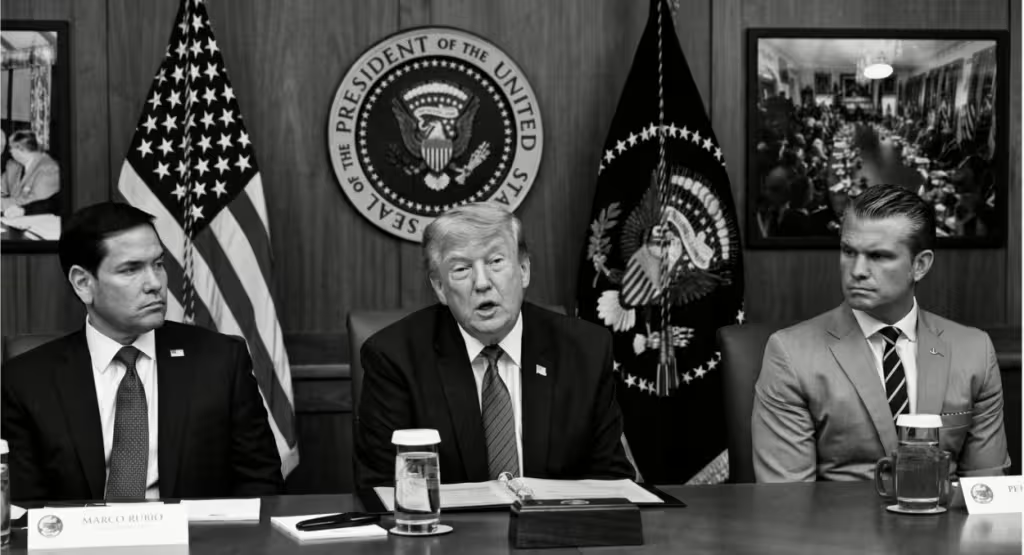
Trump returned to diplomacy after days of threatening to expand the war against Iran, saying he halted an attack he described as the largest since World War II to see whether a deal was possible. He said regional leaders, including Saudi Crown Prince Mohammed bin Salman, preferred talks to a strike that could trigger an unpredictable escalation. The shift comes ahead of announced US-Iran talks on Monday and parallel signs of progress between Iran and Oman on restoring passage through the Strait of Hormuz.
Details
- Hormuz talks: Iranian Foreign Minister Abbas Araghchi said talks with Oman on a mechanism for ship transit had reached their final stages, without confirming whether they would end Tehran’s toll demands or fully reopen the waterway.
- Cost of disruption: The effective closure of Hormuz has lifted fuel prices and forced countries to draw on oil reserves, underscoring the waterway’s importance to global energy flows.
- Regional pressure: Iranian attacks in recent weeks have hit US partners including Jordan, Bahrain and Kuwait, while Iran-aligned Iraqi groups have launched drones at Saudi Arabia.
- Domestic pressure: Trump faces calls from congressional Republicans to clarify the war’s objectives and endgame ahead of midterm elections, after 18 US service personnel have been killed in action since February.
- Failed framework: A US-Iran memorandum of understanding reached in June collapsed over competing interpretations of how to restore shipping through Hormuz, followed by renewed sanctions, strikes and a naval blockade.
- Saudi role: The Wall Street Journal reported that Riyadh pressed Washington in meetings and calls to de-escalate, arguing that weakening Iran-aligned militias had opened space for diplomacy.
- Israel’s position: Trump did not call Israeli Prime Minister Benjamin Netanyahu before cancelling the attack, despite Israel’s role in launching the war alongside the US and its support for a tougher military line.
Between the lines
The US shift appears less like a strategic settlement than a pause from the risks of a major offensive at a time when Trump’s military and political choices are narrowing. Diplomacy gives him an exit from immediate escalation, but could also invite Iran to test whether his threats will translate into action if talks fail again.
What to watch
An agreement on navigation through Hormuz will be a more meaningful test of de-escalation than political statements alone. If Monday’s talks fail or threats to shipping and Gulf allies continue, Trump could quickly return to escalation, while negotiations over Iran’s nuclear programme remain further away than simply reopening the waterway.