The latest
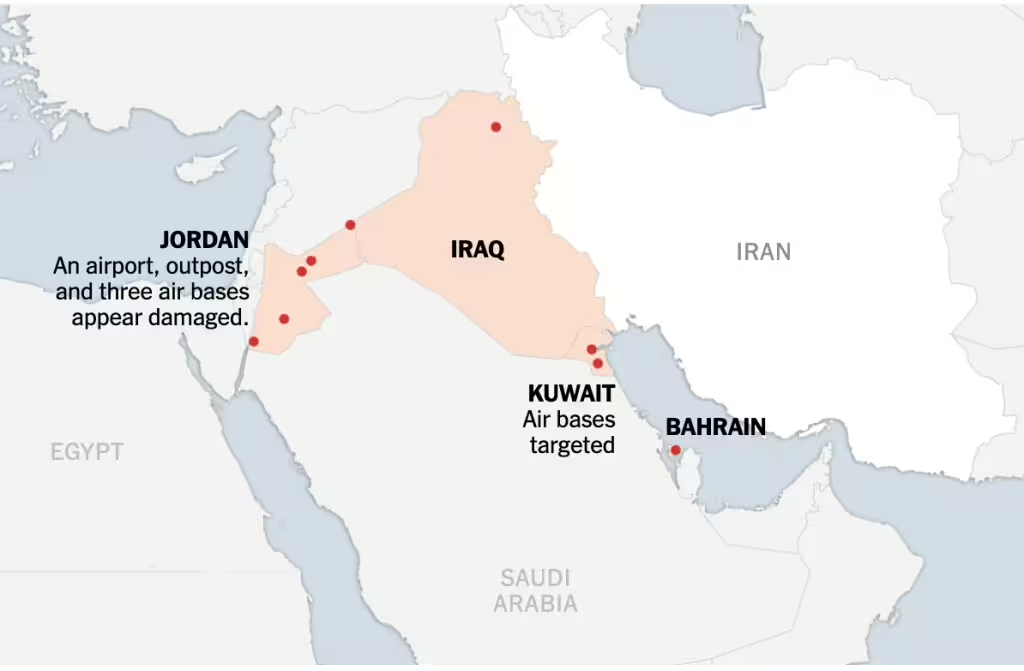
A visual investigation found that Iran retains the ability to hit specific U.S. targets in the Middle East, despite repeated claims by the Trump administration that its military capabilities have been diminished or destroyed. The evidence documented damage at nine locations since the ceasefire collapsed.
Muwaffaq Salti Air Base in Jordan sustained the most extensive documented damage. Verified images showed at least 20 structures completely or partly destroyed, along with damage to two hangars and three drone shelters. One strike hit an area believed to contain prefabricated military housing.
Three U.S. service members assigned to missile-defense units were killed in the attack, while others were wounded. Lower-resolution European satellite images and clearer Iranian imagery also confirmed that a structure at the Tower 22 military outpost near the Jordan-Syria border was destroyed.
Details:
- Scope of attacks: Iran targeted nine U.S. locations over two weeks, including four sites that had already been struck during the war’s opening months.
- Earlier campaign: Iran hit 18 U.S.-used military sites across seven countries during the first phase of the conflict.
- Strike footage: Video from inside Muwaffaq Salti showed a projectile exploding near buildings as debris fell and the person filming retreated into a shelter.
- Air defenses: No available footage shows whether the base’s defensive systems were activated during the attack.
- Restricted imagery: The U.S. government asked major satellite providers to withhold high-resolution images to protect American troops.
- Independent verification: Iranian imagery was compared with videos from the sites and satellite images from NASA and the European Space Agency.
Between the lines
The images do not establish the full extent of Iran’s remaining military power, but they undermine claims that its ability to inflict precise damage has disappeared. The restrictions on official imagery also create an information gap that Tehran exploits by distributing its own images as propaganda.
What to Watch:
Attention will focus on the U.S. investigation into the Jordan attack and whether new imagery reveals further damage at other sites. The performance of air-defense systems remains the central question in explaining how projectiles reached areas housing American troops.