The latest
Air raid sirens sounded across Kuwait and Bahrain early Saturday as U.S. Central Command (CENTCOM) announced it had completed a seventh consecutive night of strikes against Iran. Tehran, meanwhile, claimed a series of attacks on U.S. military bases and maritime targets, although several competing claims could not be independently verified.
Details
- U.S. strikes: CENTCOM said the operation targeted surveillance sites, military logistics infrastructure, underground weapons depots, and naval capabilities, adding that the naval blockade of Iranian ports remains in effect.
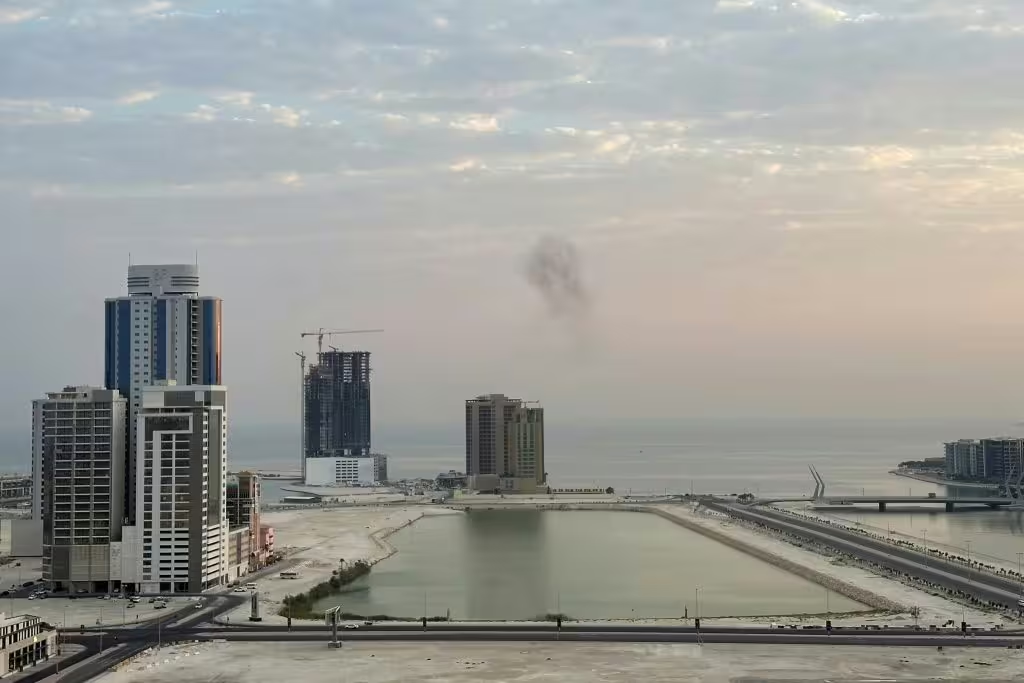
- Iranian response: Iran’s Islamic Revolutionary Guard Corps claimed it struck U.S. bases in Kuwait and Jordan, destroyed an artificial intelligence center in Bahrain, and attacked a U.S. vessel in the northern Indian Ocean. Those claims have not been independently confirmed.
- Regional alerts: Saudi authorities issued early warning alerts for Al Kharj and Yanbu before later declaring the danger had passed. A U.S. official told Axios that Iran fired a ballistic missile at a U.S. military base in Saudi Arabia.
- Maritime security: CENTCOM rejected Iranian claims that two oil tankers exploded after sailing through a mined route near the Strait of Hormuz. Separately, the IRGC claimed it halted four vessels attempting to transit the strait.
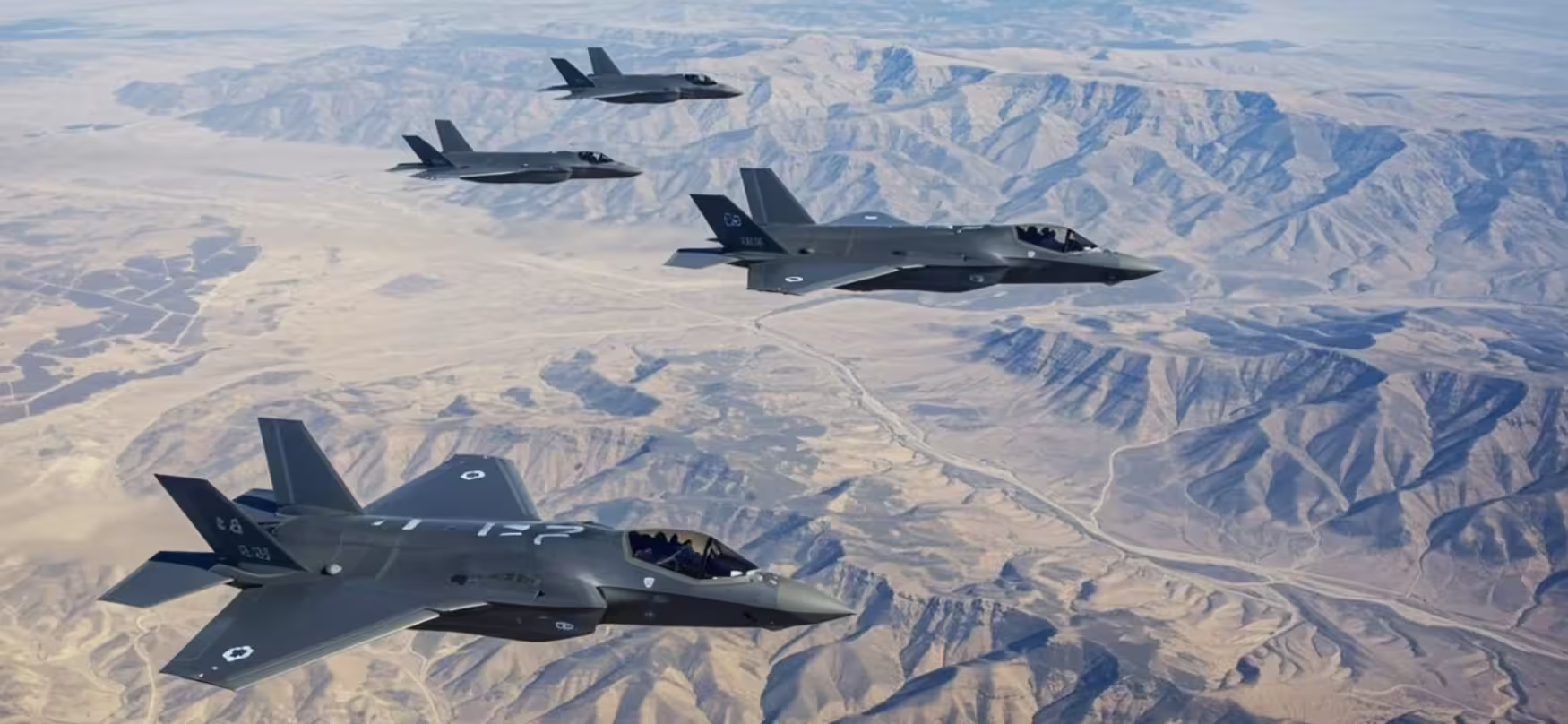
- U.S. deployments: Washington reinforced its military presence by sending additional aerial refueling aircraft and fighter jets to the region, while the State Department urged Americans to reconsider travel to Israel and across the Middle East.
Background
The Strait of Hormuz carries roughly one-fifth of the world’s seaborne oil trade. The latest fighting has sharply reduced commercial shipping through the waterway, heightening concerns over global energy supplies and international trade, according to maritime tracking data and Western reports.
Between the lines
The latest developments suggest the conflict is expanding beyond direct military targets to critical logistics and maritime infrastructure, raising the risk that countries hosting U.S. forces could become increasingly involved even as Washington and Tehran continue to present sharply conflicting narratives.
What to watch
Attention will focus on whether Washington broadens its target set inside Iran, how Tehran responds against U.S. forces or commercial shipping, and whether the fighting further disrupts oil flows through the Strait of Hormuz.