The latest
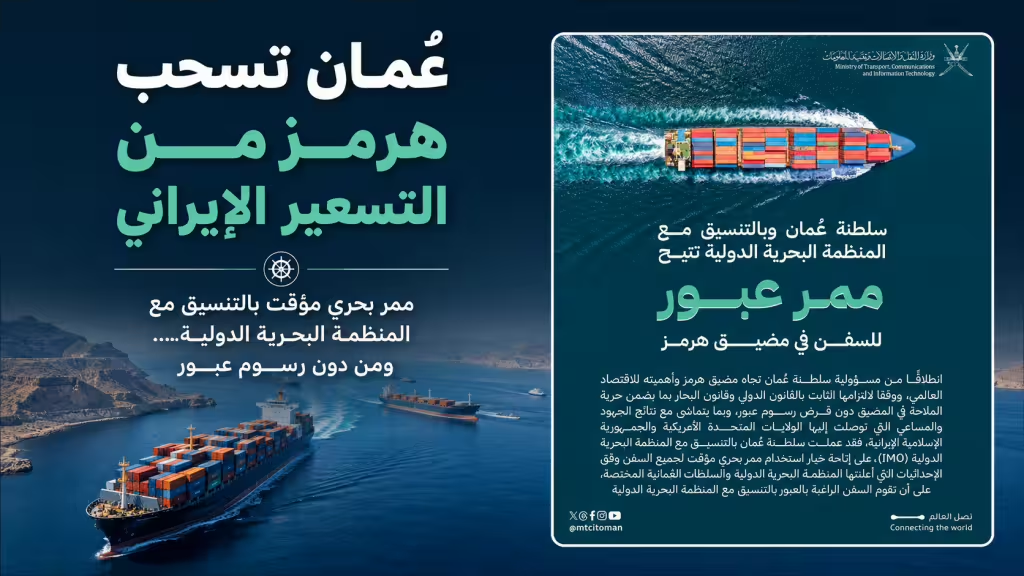
Oman has opened a temporary maritime corridor for ships crossing the Strait of Hormuz, in coordination with the International Maritime Organization.
The key line in the Omani statement was direct: passage will be available without transit fees.
That wording cuts against Iran’s effort to build on the Muscat statement and present the strait as a space for joint management, maritime services and future costs.
Iran has been trying to shift Hormuz from a free international passage into a gate that can be priced.
Oman is pulling it back toward international law.
Details
• The Omani statement did not refer to an Iranian mechanism for managing the strait. It referred to coordination with the International Maritime Organization.
• The temporary corridor is available to ships seeking passage according to coordinates announced by the IMO and the relevant Omani authorities.
• The statement emphasized freedom of navigation and the absence of transit fees.
• That undercuts, or at least narrows, any Iranian attempt to present future charges as “service costs.”
• The distinction is crucial: Iran is talking about costs. Oman is talking about free passage.
• The statement does not end negotiations with Iran, but it removes the claim that Muscat has accepted the pricing of the strait.
What to watch
The real test comes after the 60-day window.
If Oman’s wording remains the reference point, Iran’s fee proposal will lose ground.
If the language of “services” and “costs” returns to the table, Tehran may try to sell tolls under a softer administrative label.
The bottom line: Oman did not confront Iran loudly.
But it said enough.
Hormuz is an international waterway, not a collection box.