News
The region is moving between cautious optimism and growing concern as Washington and Tehran edge toward an initial understanding to end the war.
The signals remain mixed: progress in negotiations on one side, and new U.S. strikes in southern Iran on the other, along with leaks about additional conditions that could complicate or derail the agreement.
According to leaks from the talks, the Pakistan-sponsored memorandum would include a 60-day halt to hostilities, an extension of the ceasefire announced on April 8, and direct negotiations over Iran’s nuclear program and the future of its enriched uranium.
Details:
• U.S. Secretary of State Marco Rubio said President Trump is ready to reach “a good deal or no deal,” adding that the understanding may need a few more days.
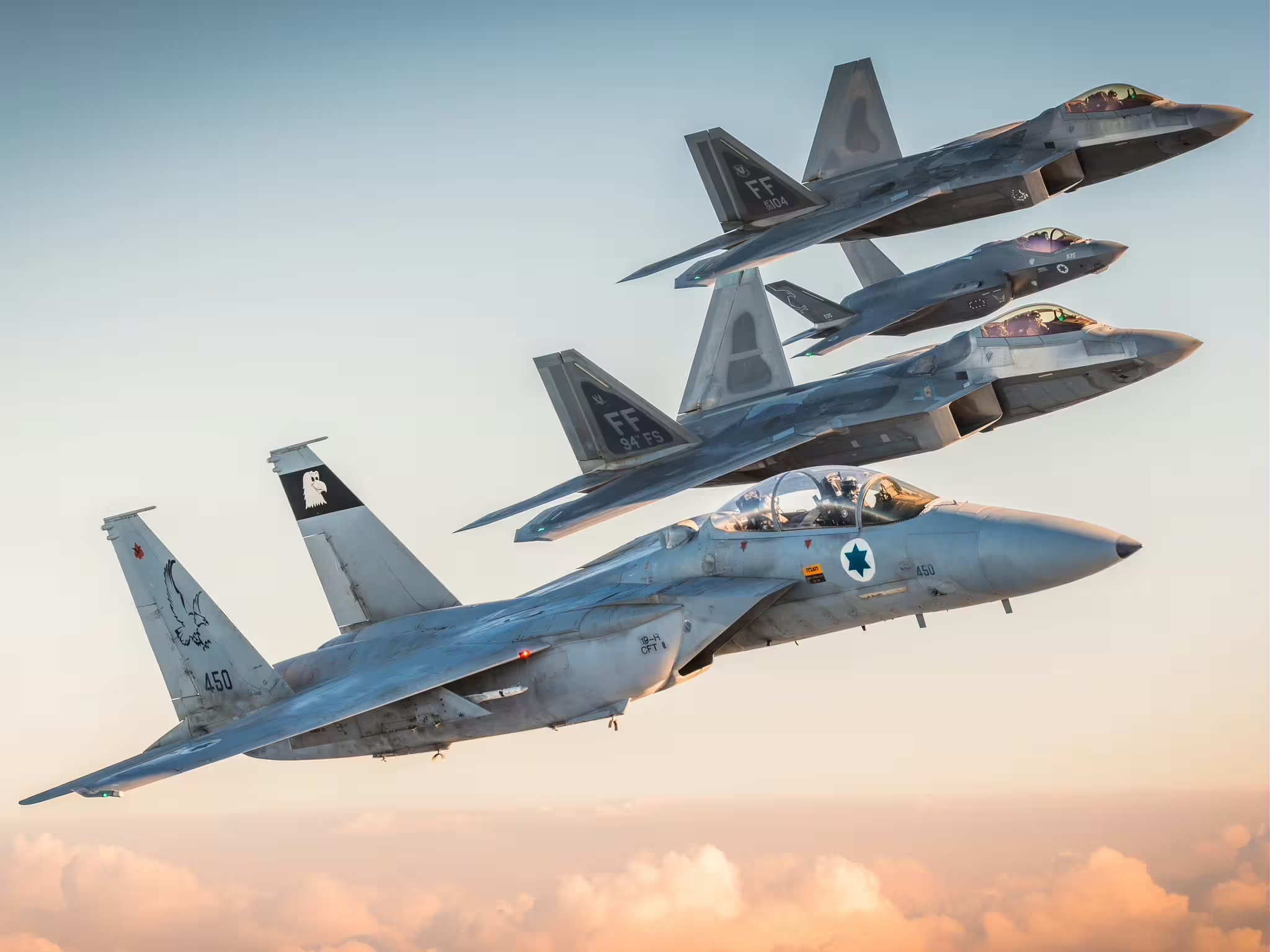
• As de-escalation talks continued, U.S. forces carried out new strikes in southern Iran targeting missile sites and boats that U.S. Central Command said were attempting to plant mines in the Strait of Hormuz.
• Iranian Foreign Ministry spokesman Esmaeil Baqaei said an agreement is “not imminent,” despite progress in the talks.
• Iran’s Fars News Agency, which is close to the IRGC, said one of the main sticking points is the mechanism for releasing frozen Iranian funds. It quoted a source in the negotiating team as saying there would be “no final agreement before the agreed funds are deposited.”
• President Donald Trump added a new condition that alarmed mediators, demanding that Gulf states and Pakistan join the “Abraham Accords” as part of the understanding with Iran.
• Reports point to the growing influence of “middle powers” in the Middle East, especially Saudi Arabia, the UAE, Qatar, Kuwait, Turkey, Jordan, and Pakistan, which are pushing to contain the war because of its huge economic and security costs.
• Qatar hosted Iranian Foreign Minister Abbas Araghchi and Iranian Parliament Speaker Mohammad Bagher Qalibaf in Doha this week, signaling the return of Qatari mediation despite Doha having previously been targeted by Iranian attacks during the war.
• Gulf officials told +ontime that full normalization with Israel remains difficult for now because of Israeli policies in Gaza and the West Bank, and because of concerns that the region could appear to be part of an “Israeli axis” against Iran.
• Gulf states also believe they will have to coexist with Iran after the war ends, especially because the United States could later redirect its attention to other regions.
What next?
• The current negotiations look closer to a de-escalation framework than a comprehensive final settlement.
• Any failure over the frozen Iranian funds, or over the “Abraham Accords” condition, could collapse the understanding before it is officially signed.
• Gulf states are trying to pursue two tracks at once: preventing the war from widening, while preparing militarily for any new Iranian escalation.
• Regional assessments suggest all sides have taken losses, without any party achieving a decisive strategic victory.
Analysis
What stands out in this track is not only the possibility of a U.S.-Iranian agreement, but the shift in how Middle Eastern crises are being managed.
For the first time in years, Gulf states, Turkey, Qatar, and Pakistan appear to be moving like a political bloc trying to shape the pace of the war, instead of waiting for decisions from Washington or Tehran.
At the same time, the leaks reveal a widening gap between the Gulf vision for ending the war and the Israeli view, which still leans toward continued pressure and confrontation.
Adding the “Abraham Accords” condition at this stage may be a U.S. attempt to turn any de-escalation with Iran into a broader reshaping of regional alliances.
But it also risks blowing up the understanding itself, because several Gulf states do not want to appear as part of an axis directed against Tehran.