The latest
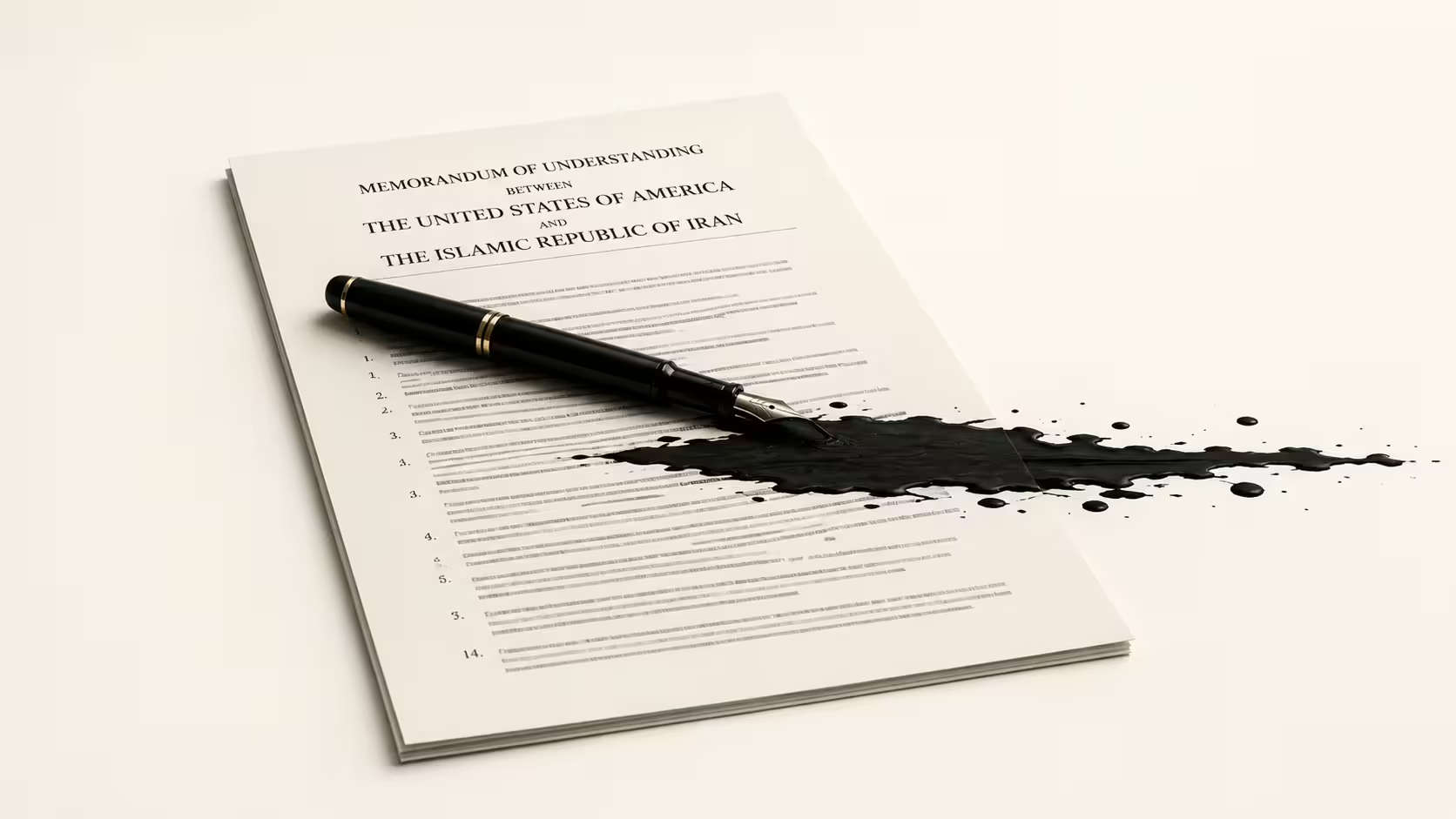
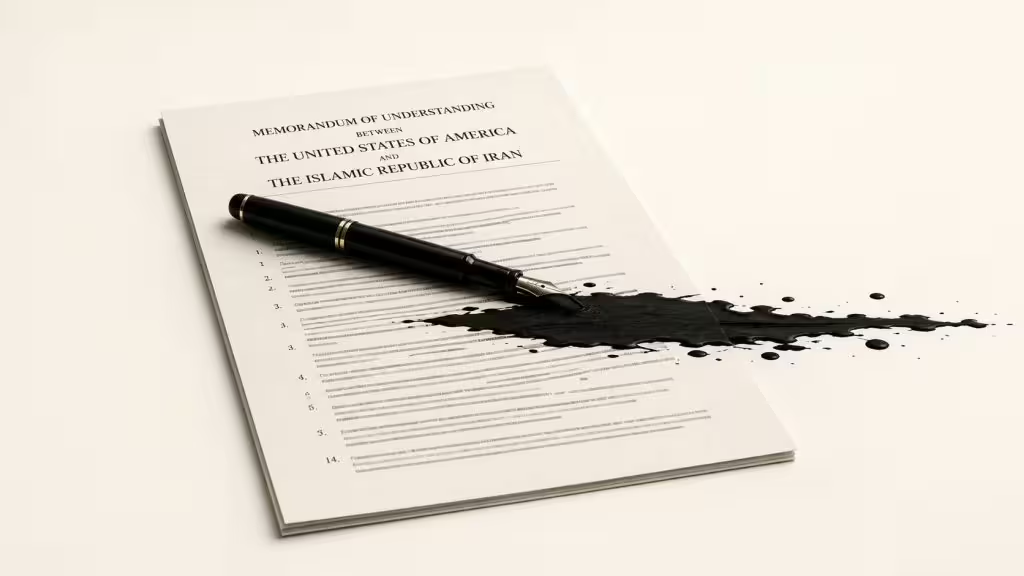
The United States on Wednesday released the official text of a memorandum of understanding reached with Iran over the weekend, offering the clearest look yet at the deal’s sequencing and trade-offs.
The document, titled the “Islamabad Memorandum of Understanding between the United States of America and the Islamic Republic of Iran,” lays out a 14-point roadmap for ending the war, reopening the Strait of Hormuz, restoring limited oil and financial flows, and launching talks on Iran’s nuclear program.
A senior U.S. administration official said the core of the deal is to reopen Hormuz immediately, require Iran to address its enriched nuclear material, and link any broader sanctions relief to Tehran’s conduct in the next phase.
The memorandum is expected to be formally signed on Friday. That would trigger a 60-day window to negotiate a final agreement.
Details
1. Ending the war on all fronts
The first clause says the United States, Iran and their allies in the current war will sign the memorandum to declare the immediate and permanent end of military operations on all fronts, including Lebanon.
It commits both sides not to launch a war or military operation against each other, and to refrain from threatening or using force.
The clause also refers to Lebanon’s sovereignty and territorial integrity, and says the final agreement will confirm the permanent end of the war on all fronts.
2. Sovereignty and non-interference
The second clause commits Washington and Tehran to respect each other’s sovereignty and territorial integrity.
It also requires both sides to refrain from interfering in each other’s internal affairs.
3. A 60-day deadline
The third clause commits the two sides to negotiate and reach a final deal within a maximum of 60 days.
The deadline can be extended only by mutual consent.
4. Lifting the U.S. naval blockade
The fourth clause says the United States will begin removing its naval blockade and any related impediments against Iran immediately after the memorandum is signed.
Washington commits to fully ending the blockade within 30 days.
During that period, vessel traffic will be restored in proportion to prewar levels, according to the text.
The United States also commits to removing its forces from Iran’s proximity within 30 days after the final deal.
5. Safe passage through Hormuz
The fifth clause says Iran will use its best efforts to arrange safe passage for commercial vessels, free of charge, for 60 days only.
The passage would cover movement from the Persian Gulf to the Sea of Oman and back.
Commercial traffic is supposed to begin immediately, while technical and military obstacles, including mines, are to be removed within 30 days.
The clause also says Iran will hold talks with Oman on the future administration and maritime services of the Strait of Hormuz, in consultation with other Gulf littoral states and in line with international law.
6. A $300 billion reconstruction plan
The sixth clause commits the United States, together with regional partners, to develop a mutually agreed plan worth at least $300 billion for Iran’s reconstruction and economic development.
The implementation mechanism is to be finalized as part of the final deal within 60 days.
Washington also commits to granting the licenses, waivers and permissions needed for related financial transactions.
7. Sanctions and IAEA resolutions
The seventh clause deals with IAEA Board of Governors resolutions and unilateral U.S. sanctions, including primary and secondary sanctions.
The text says these issues will be addressed under an agreed schedule as part of the final deal.
Both sides acknowledge the importance of sanctions termination and say they intend to address the issue immediately in negotiations.
8. Iran’s nuclear commitments
The eighth clause says Iran reaffirms that it will not procure or develop nuclear weapons.
Washington and Tehran agree to resolve the status of Iran’s stockpile of enriched material through a mutually agreed mechanism.
At minimum, the text says the material would be down-blended on site under IAEA supervision.
The two sides also agree to discuss enrichment and other issues related to Iran’s nuclear needs under a framework to be agreed in the final deal.
9. Maintaining the status quo
The ninth clause says both sides will maintain the status quo until a final deal is reached.
Iran will keep its nuclear program at its current status.
The United States will not impose new sanctions or deploy additional forces in the region.
10. Waivers for Iranian oil exports
The tenth clause says the U.S. Treasury Department will issue waivers immediately after the memorandum is signed and until sanctions are terminated.
Those waivers would cover Iranian crude oil, petroleum products and derivatives.
They would also apply to associated services, including banking transactions, insurance and transportation.
11. Frozen Iranian funds and assets
The eleventh clause says the United States will make Iran’s frozen or restricted funds and assets fully available for use once the memorandum is implemented.
The two sides will agree during negotiations on the procedures for releasing the funds.
The text says the money should be fully usable for payments to any final beneficiary designated by Iran’s central bank.
Washington commits to issuing the necessary licenses and authorizations.
12. Monitoring mechanism
The twelfth clause says the two sides will establish an executive mechanism to monitor the successful implementation of the memorandum.
The mechanism will also track future compliance with the final deal.
13. Final-deal talks after initial implementation
The thirteenth clause says negotiations on the final deal will begin after the memorandum is signed and after implementation begins on clauses 1, 4, 5, 10 and 11.
Those clauses cover the end of military operations, the naval blockade, commercial passage through Hormuz, oil-export waivers and frozen assets.
The talks will then focus exclusively on the remaining clauses.
14. A binding U.N. Security Council resolution
The final clause says the final deal will be endorsed by a binding U.N. Security Council resolution.
That would move the agreement from a political understanding into a more formal international framework.
What to watch
The memorandum creates a fast path for reopening Hormuz and restoring some Iranian oil and financial access.
But the hardest questions are still unresolved. The next test is whether Washington and Tehran can agree on enrichment, sanctions relief and verification before the 60-day window closes.