The Update
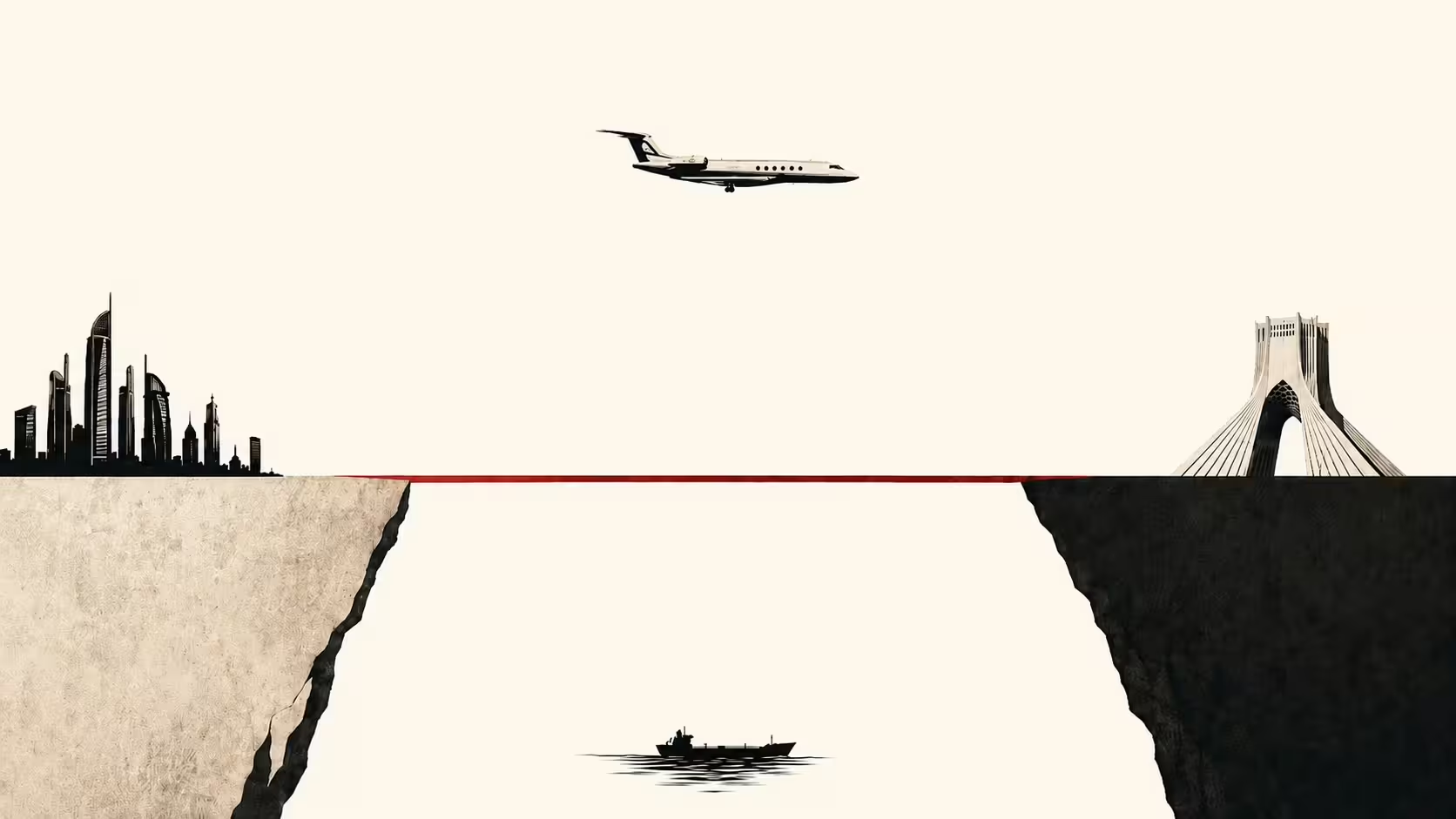
Trump is trying to push Iran into a new phase of negotiations: more firepower first, then the deal.
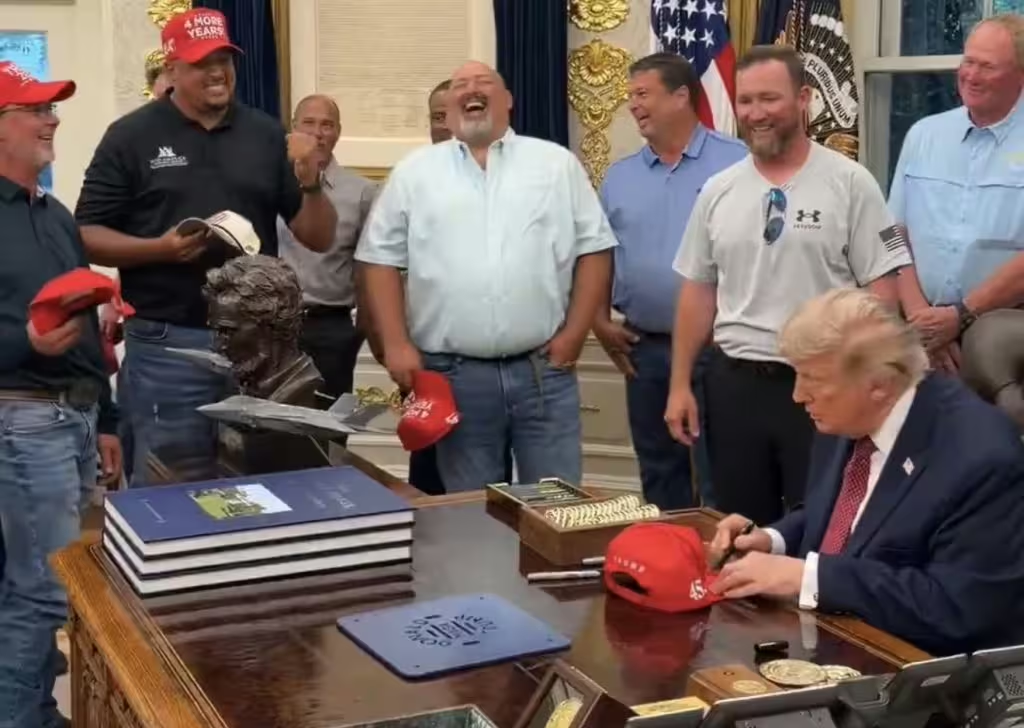
Speaking at the White House on June 10, the U.S. president said Washington had hit Iran “hard” the previous day and would hit it “hard” again today.
“We were really close to a deal,” Trump said, but accused Tehran of “tapping us along” and treating Washington like “suckers.”
Trump told Fox News reporter Trey Yingst that the United States was getting close to ordering new strikes on Iranian power plants and bridges. He framed the threat as a response to what he sees as Tehran’s deliberate delay tactics in prolonged negotiations.
The escalation follows the downing of a U.S. Apache helicopter near the Strait of Hormuz. Fox News said the United States launched overnight strikes on Iran-linked targets, hitting roughly 20 sites.
Trump also offered a new account of the helicopter incident. He said an Iranian drone became lodged between the Apache’s two pilots as they maneuvered to avoid an explosion.
But the military pressure does not mean the diplomatic track has collapsed.
Trump’s message is sharper than before: Iran can still sign, but the cost of waiting is rising.
Details
• Trump said the United States would hit Iran “very hard” if the deal is not completed.
• On the agreement, his message was simple: it has to be signed, not left as a political promise.
• He accused Tehran of stretching out the talks and trying to wear Washington down politically.
• He raised the possibility of new U.S. strikes on Iranian power plants and bridges.
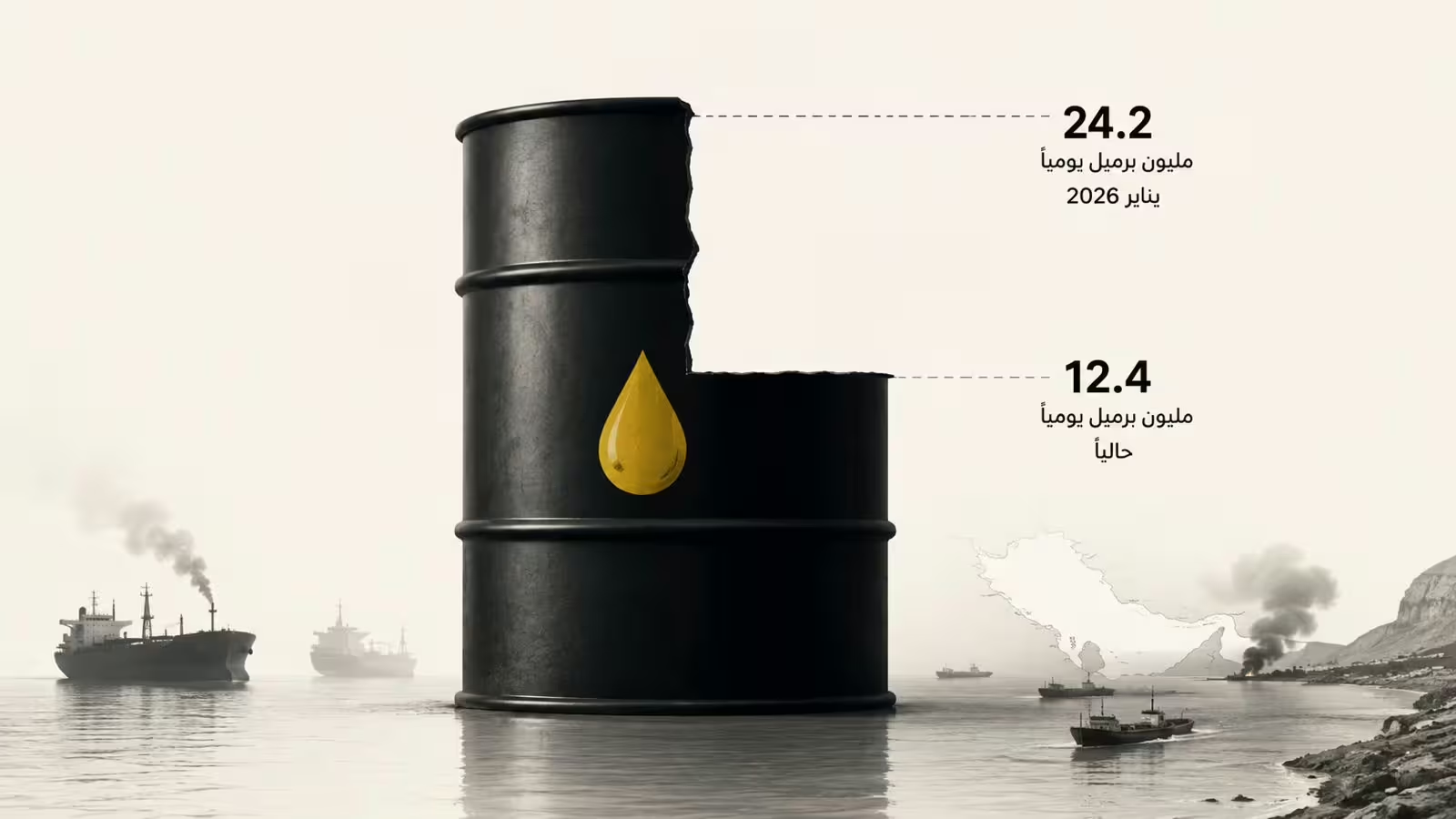
• Trump said Washington is taking “millions of barrels of oil” out of Iran every night, pointing to economic and energy pressure alongside military force.
• He linked that pressure to oil prices, arguing that U.S. actions helped prevent a larger price surge.
• Oil prices still rose after his remarks, as markets priced in renewed risk around Iran.
• The U.S. posture now combines threats of airstrikes, a tighter blockade, pressure on Iranian oil and diplomatic mediation.
• In the background, Qatari mediators are reportedly heading to Tehran to try to finalize a possible understanding.
• The American message is clear: the deal is still available, but delay will be expensive.
What to watch
The next test is the target list.
If Washington limits new strikes to military sites, radars and air defenses, the crisis may remain within the frame of a controlled military response.
If the strikes move to power plants and bridges, the confrontation enters a more dangerous phase. The targets would move closer to civilian infrastructure and raise the risk of a wider escalation.
The latest
President Donald Trump has escalated his rhetoric toward Iran, saying he is “close” to authorizing new military strikes that could target key infrastructure, including power stations and bridges, if Tehran continues what he described as delays in negotiations.
In an interview with Fox News, Trump accused Iran of failing to negotiate seriously and suggested that additional military options remain under consideration.
Tehran responded quickly. Iranian Parliament Speaker Mohammad Bagher Ghalibaf warned that “every hostile act will be met with a direct and decisive response,” signaling that any new attack on Iran would trigger immediate retaliation.
The exchange of threats comes as diplomatic efforts continue behind the scenes. Reuters reported, citing an informed source, that a Qatari mediation delegation arrived in Tehran as part of a push to finalize an agreement between Washington and Tehran.
At the same time, Trump intensified his criticism on Truth Social, claiming that “the Iranian military is in chaos” and that Iran “talks a lot and does nothing,” adding that Tehran “will pay the price.”
Details
• Trump suggested that Iranian infrastructure could become a target if negotiations stall.
• Ghalibaf warned that any new attack would prompt a direct and forceful response.
• A Qatari delegation arrived in Tehran to advance mediation efforts between the United States and Iran.
• The diplomatic push continues amid unresolved disputes over sanctions and the terms of a potential nuclear agreement.
What to watch
The key question is whether Qatari mediation can help contain tensions and move the talks toward a deal, or whether the increasingly sharp rhetoric on both sides will push the standoff toward a broader military confrontation.