The latest
After years of trade fights and hard-line rhetoric, Trump is now talking about China as a power the United States can manage — and perhaps accommodate.
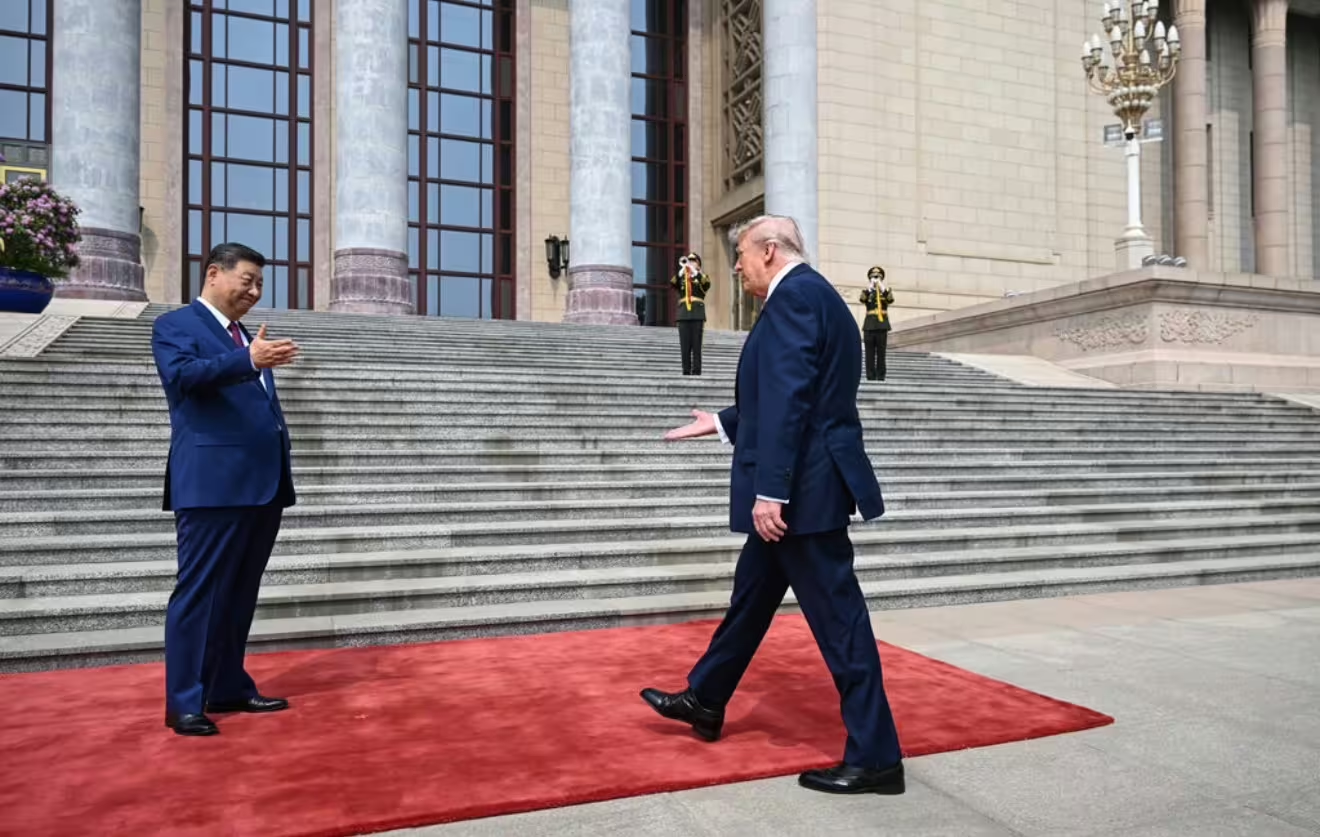
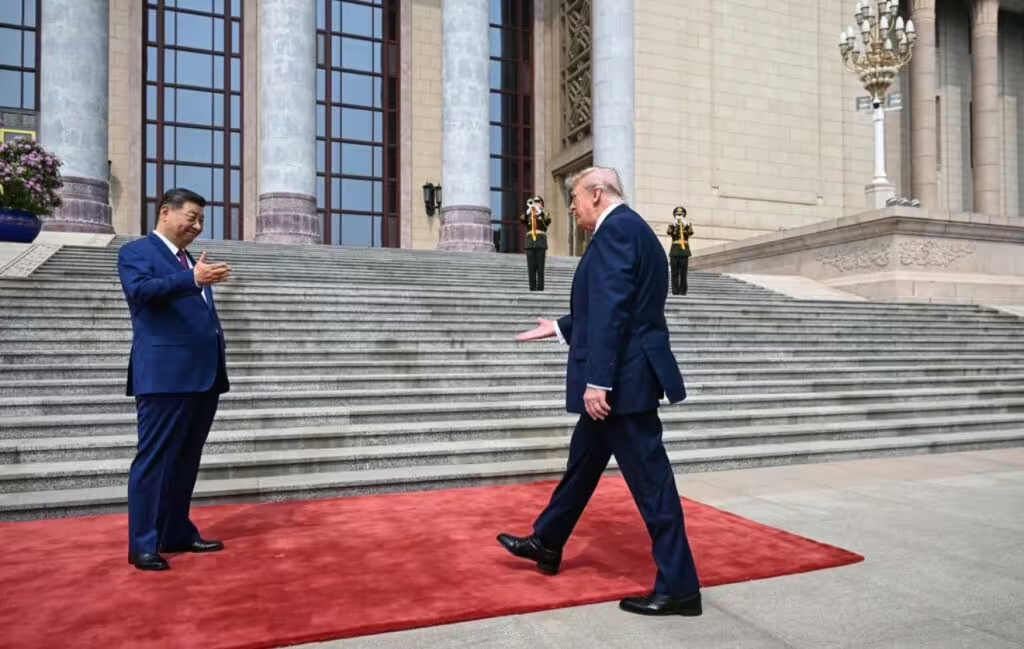
The new phrase is “constructive strategic stability.” It was rolled out during Trump’s meeting with Chinese President Xi Jinping in Beijing last month.
The language sounds dry. But in diplomacy, wording matters.
It tells agencies in both governments, and U.S. allies across Asia, that Washington and Beijing may be looking for new rules to reduce friction, especially on trade and Taiwan.
That shift is causing anxiety from Taipei to New Delhi and Manila.
The message many officials hear is blunt: Trump wants a working arrangement with China, and everyone else may need to adjust.
This is not only about language.
Trump has praised Xi in unusually warm terms, calling him a major leader. He has also said U.S. arms sales to Taiwan are being held “in abeyance” as a negotiating chip with China.
He has even spoken of a “G2” — a pairing of two equal superpowers: the United States and China.
For Beijing, this is an opening it has wanted for years.
China has long pushed Washington to formally recognize it as a peer power. Barack Obama resisted that framing. Trump is giving it room.
Details
• The shift began with Secretary of State Marco Rubio’s use of the phrase “strategic stability” to describe a possible opening with Beijing.
• Chinese officials picked up the wording and pushed for a warmer version: “constructive strategic stability.”
• The White House says the new relationship is built on “fairness and reciprocity.” Beijing stresses cooperation and managing differences.
• Defense Secretary Pete Hegseth told a security forum in Singapore that Asia was right to be alarmed by China’s military buildup, but added that Washington “respects” China’s ambitions.
• Notably, Hegseth did not mention Taiwan in his speech, an unusual omission for a U.S. defense secretary at that forum.
• Trump says he discussed Taiwan and U.S. arms sales to the island “in great detail” with Xi.
• Earlier this year, the White House ordered the State Department not to move ahead with a large Taiwan arms package approved by Congress, in order to avoid angering Beijing before the summit.
• Rubio later said the package was not frozen, only “under review.” But Taipei heard a different message.
• Trump has sounded closer to Beijing’s language on Taiwan, saying he does not want anyone pushing for independence and does not want the United States to travel thousands of miles to fight a war.
• His decision to allow Nvidia to sell powerful chips to Chinese companies added another signal that Biden-era technology controls may be easing.
• In India, Rubio tried to reassure officials after the Beijing summit, but the visit produced little of substance.
• Analysts say the shared concern over China was the strongest glue in U.S.-India ties. That glue now looks weaker.
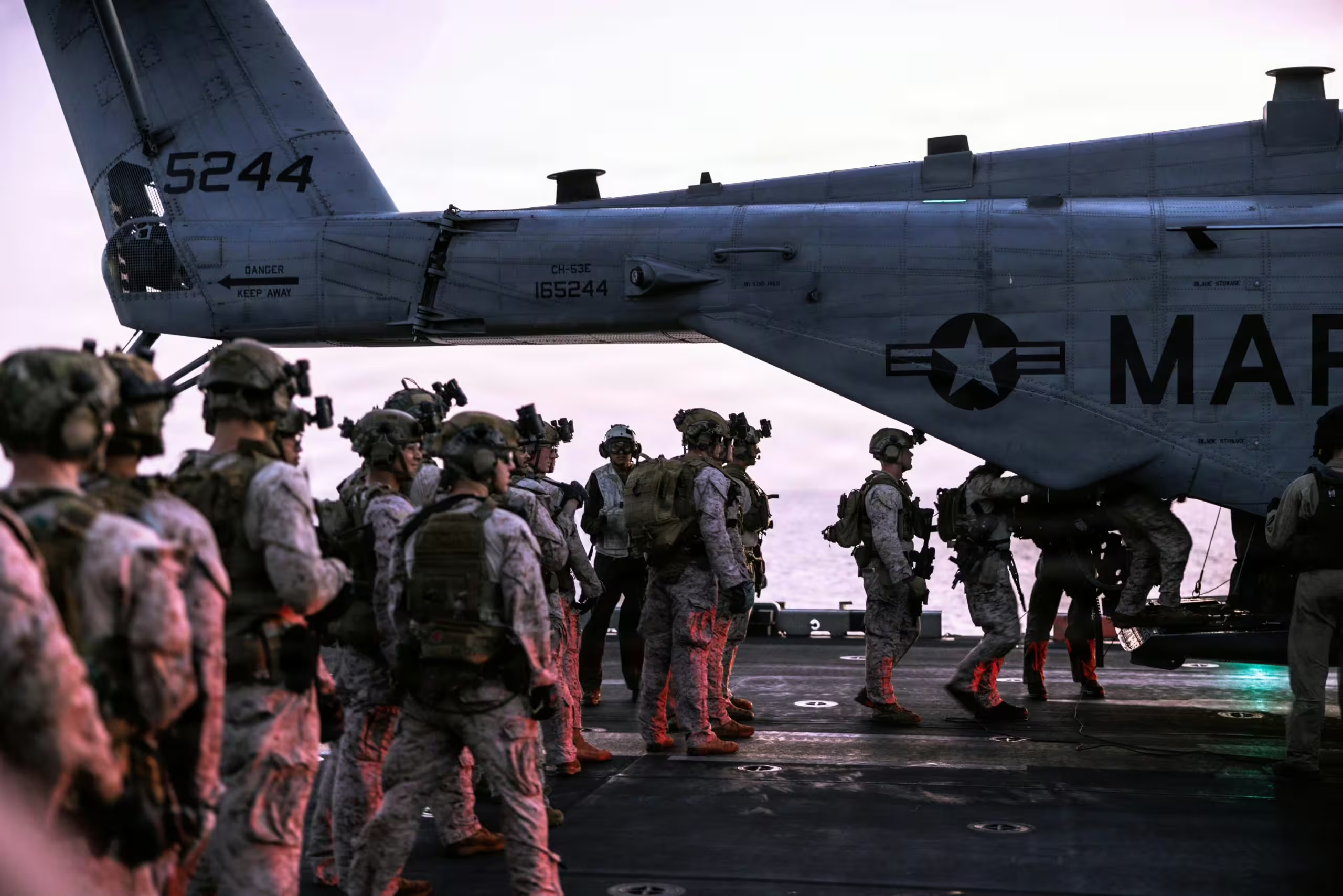
• Still, Washington has not militarily withdrawn from Asia. U.S. Indo-Pacific Command is building a logistics hub in Palau, and joint exercises with the Philippines and other allies are expanding.
• But the political message is less clear: Is the United States still leading an effort to contain China, or is it looking for a managed coexistence with it?
What to watch
Taiwan is the key test.
If the freeze on arms sales continues, U.S. allies are likely to read the shift as policy, not a negotiating tactic.
If the administration restarts military support for Taipei, the opening to Beijing may look more limited and conditional.
For now, Trump appears to be resetting the China relationship around a new idea: economics first, less confrontation, and an implicit recognition that Beijing is no longer just a rising power, but a peer that Washington must deal with.