Details
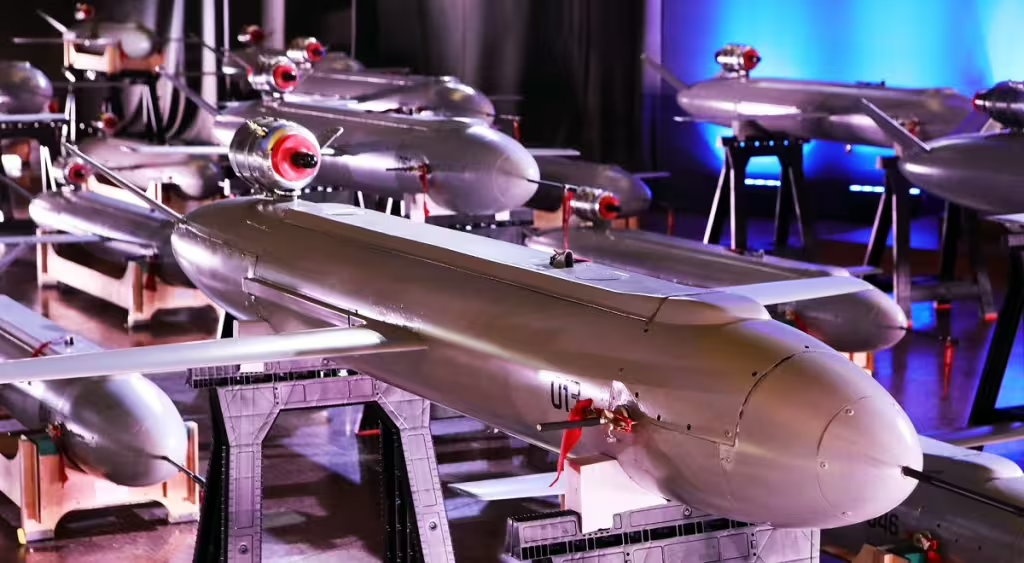
- Ukrainian President Volodymyr Zelenskyy announced the drone deal after meeting Latvian Prime Minister Andris Kulbergs in Tallinn.
- The agreement was reached on the sidelines of a Nordic-Baltic summit with leaders from Estonia, Latvia, Lithuania, Iceland, Finland, Sweden and Norway.
- Zelenskyy said the deal would strengthen joint defence and co-production, while allowing Ukraine’s battlefield experience to support its partners.
- Zelenskyy gave no details of the agreement, but Kulbergs said it would give Latvia access to Ukrainian technological know-how and co-production opportunities.
- Kulbergs said Ukrainian anti-drone combat experts would arrive in Latvia immediately.
- The agreement aims to bring Ukraine’s anti-drone expertise, technological solutions and training to Latvia while developing joint military production between the two countries.
- Latvia is the sixth country to join Ukraine’s drone cooperation initiative, according to Ukraine’s defence and security council chief Rustem Umerov.
- Zelenskyy said last month that nearly 20 countries were interested in drone deals with Ukraine.
- The Nordic-Baltic group said cooperation with Ukraine would focus on battlefield experience, training, information sharing, defence technology and co-production with European partners.
- Baltic NATO countries have reported drones entering their airspace in recent weeks, which Ukraine has blamed on Russian electronic warfare affecting drone paths.
- The Tallinn meeting followed Zelenskyy’s talks in London with the leaders of Britain, France and Germany, who said they were ready to support ceasefire talks.
- The Kremlin said Europe was still far from ready to act as a mediator in efforts to end the war, after the US-led peace track was disrupted by the Iran conflict.
What Else
Ukraine is turning its drone warfare experience into deeper defence partnerships across Europe, with Latvia now joining Kyiv’s wider drone cooperation initiative. The next test is whether these deals move quickly from political agreements to training, production and deployment as Baltic states face growing airspace concerns.