Details
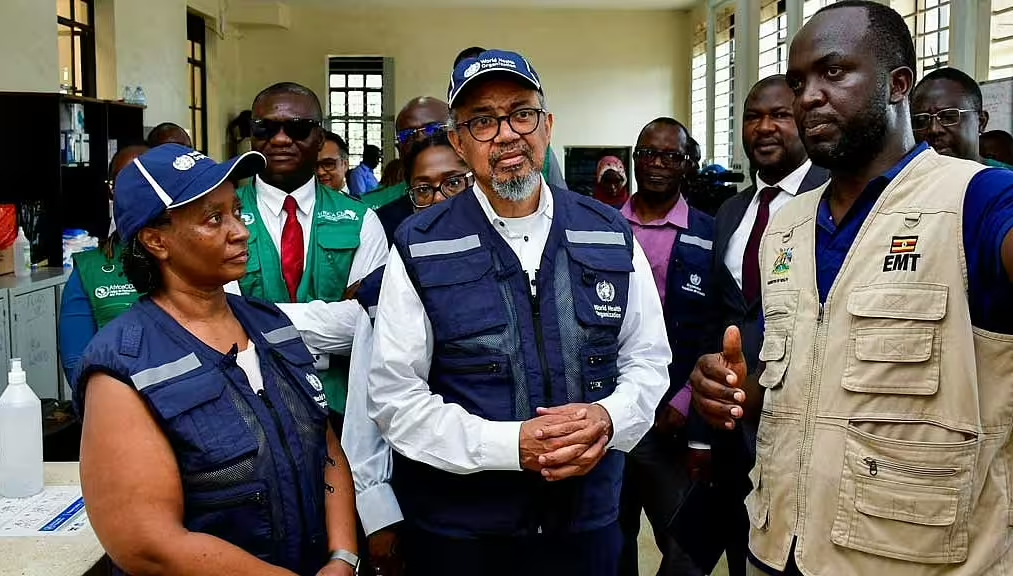
- WHO Director-General Tedros Adhanom Ghebreyesus visited Uganda as the country works to contain Ebola cases linked to the outbreak in neighbouring DR Congo.
- Tedros praised Uganda’s “prompt and capable response,” saying border screening, surveillance, testing and case management had helped detect and contain cases.
- Uganda has confirmed 19 Ebola cases, including 14 among people who entered from DR Congo and five Ugandan nationals.
- Two people have died in Uganda, according to Tedros.
- WHO has declared a public health emergency over the outbreak, which was announced on May 15 in northeastern DR Congo.
- Africa CDC said the wider outbreak has reached 544 confirmed cases and 88 deaths.
- Of those cases, 515 were recorded in DR Congo’s Ituri province, the centre of the outbreak.
- The outbreak involves the Bundibugyo species of ebolavirus, a comparatively rare strain for which there is no approved vaccine.
- WHO and Africa CDC have launched a $518 million response plan to fight the outbreak over the next six months.
- Tedros said blanket travel restrictions do not work and urged Ugandan authorities to reconsider the country’s border closure with DR Congo.
- Uganda’s Health Ministry said the WHO visit was aimed at assessing readiness and strengthening cross-border coordination to prevent further exported cases from Congo.
- Separately, Berlin’s Charité Hospital discharged a US doctor and his family after the doctor was treated for Ebola contracted while working in DR Congo. His five family members had been quarantined as high-risk contacts but showed no signs of infection.
What Else
Uganda’s next challenge is to keep border screening, testing and case management strong without relying on blanket travel restrictions, which WHO says are ineffective. Health agencies are also trying to strengthen cross-border coordination with DR Congo as most confirmed cases remain concentrated in Ituri province.