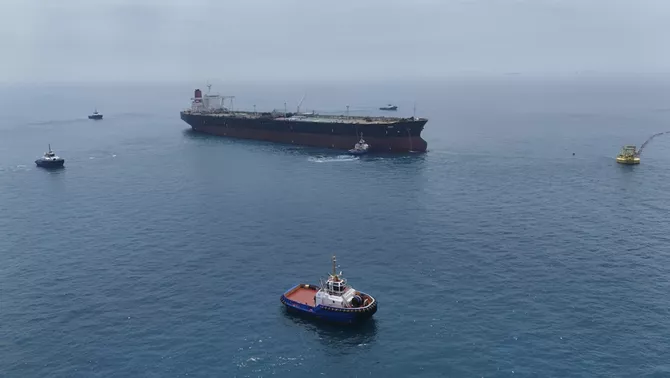
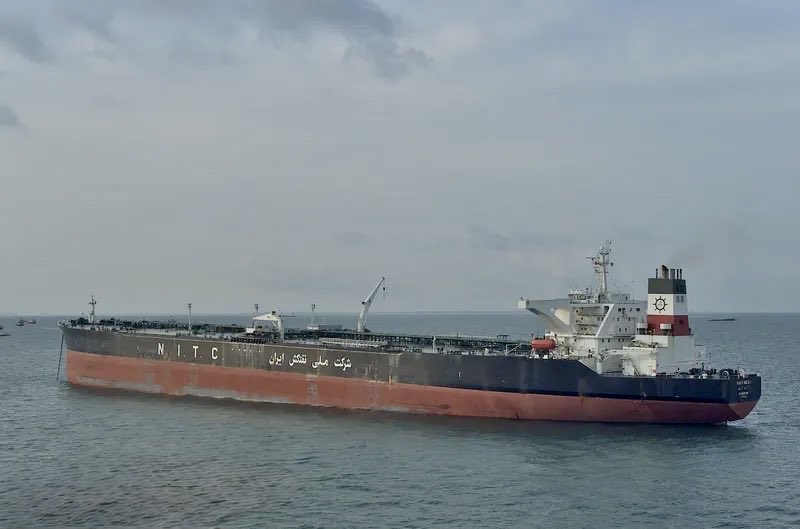
Tehran has reactivated the giant oil tanker Nasha, retired for years, and started slowly towing it toward Kharg Island, in a move that reflects an escalating crude storage crisis after exports declined due to the U.S. blockade.
Details
- The tanker is named Nasha, carries IMO number 9079107, was built in 1996, and has a capacity of about 2 million barrels of crude oil.
- The vessel had been anchored and empty off Kharg for years before TankerTrackers confirmed its reactivation, according to multiple media reports.
- The tanker is moving extremely slowly, with the current trip taking about 4 days, even though the distance can usually be covered in roughly a day and a half.
- The crisis stems from the fact that Kharg Island handles about 90% of Iran’s crude exports, while available storage space is shrinking as production continues to flow and export activity declines.
- According to the estimates cited, Kharg’s onshore tanks had about 13 million barrels of spare capacity when the U.S. blockade began on April 13, while net daily inflows stand at about 1 million to 1.1 million barrels per day.
- By that calculation, spare capacity runs out in roughly 12 days, putting Tehran under direct pressure this week.
- Nasha is not a long-term solution. Once fully loaded, it gives Iran only about 48 additional hours of continued production.
- Other options, such as ship-to-ship transfers, sailing with AIS transponders turned off, and sanctioned tankers returning through blockade lines, do not appear sufficient to absorb 1 million barrels per day.
- Lloyd’s List Intelligence estimates that around 26 Iran-linked vessels have been tracked evading restrictions since April 13, a number that is not enough to absorb the accumulated crude.
- If Iran cannot find an outlet for exports or storage, the next option will be shutting in some wells, the more dangerous decision because it could damage production capacity for a long time.
- The Asmari and Bangestan carbonate reservoirs in southern Iran are sensitive to prolonged shut-ins, as they can suffer problems such as water rising through formations, fines migration, formation compaction, and clay swelling due to changes in salinity and pH.
- Maleki and Gordon’s estimates point to a possible permanent loss of 300,000 to 500,000 barrels per day of production capacity if the current shut-in path is completed. These are directional estimates, not direct laboratory measurements.
What’s Next?
The most important step now is to monitor the movement of the Nasha around Kharg Island and the actual export volumes from the port. If floating and onshore capacity fills up without relief in shipping, Iran will face a hard decision: either cut production and shut in wells, or risk more dangerous export attempts by circumventing the blockade.