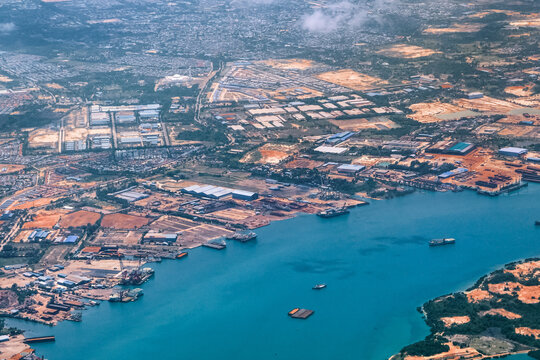
The idea, raised by some journals, of shifting pressure from the Gulf to the Strait of Malacca looks militarily attractive on paper. Instead of chasing every Iranian tanker near Hormuz, Washington would target the chokepoint through which supplies bound for China pass. But such a move would directly affect Asian energy security and place the United States against China’s deepest known vulnerability, long described as the Malacca Dilemma.
Detail
Nearly one-third of global seaborne oil trade passes through the Malacca route, while China alone accounted for 48% of the crude and condensate imports moving through it in the first half of 2025. That means any major disruption there would not simply pressure Iran. It would reach into Chinese demand itself.
A U.S. Energy Information Administration report says China took about 90% of Iran’s oil exports in 2023, while another report estimated Iranian crude and condensate shipments to China at more than 1.2 million barrels per day. This is the market through which Iranian oil remains convertible into real income despite sanctions.
But the problem is that Malacca is not an Iranian corridor.
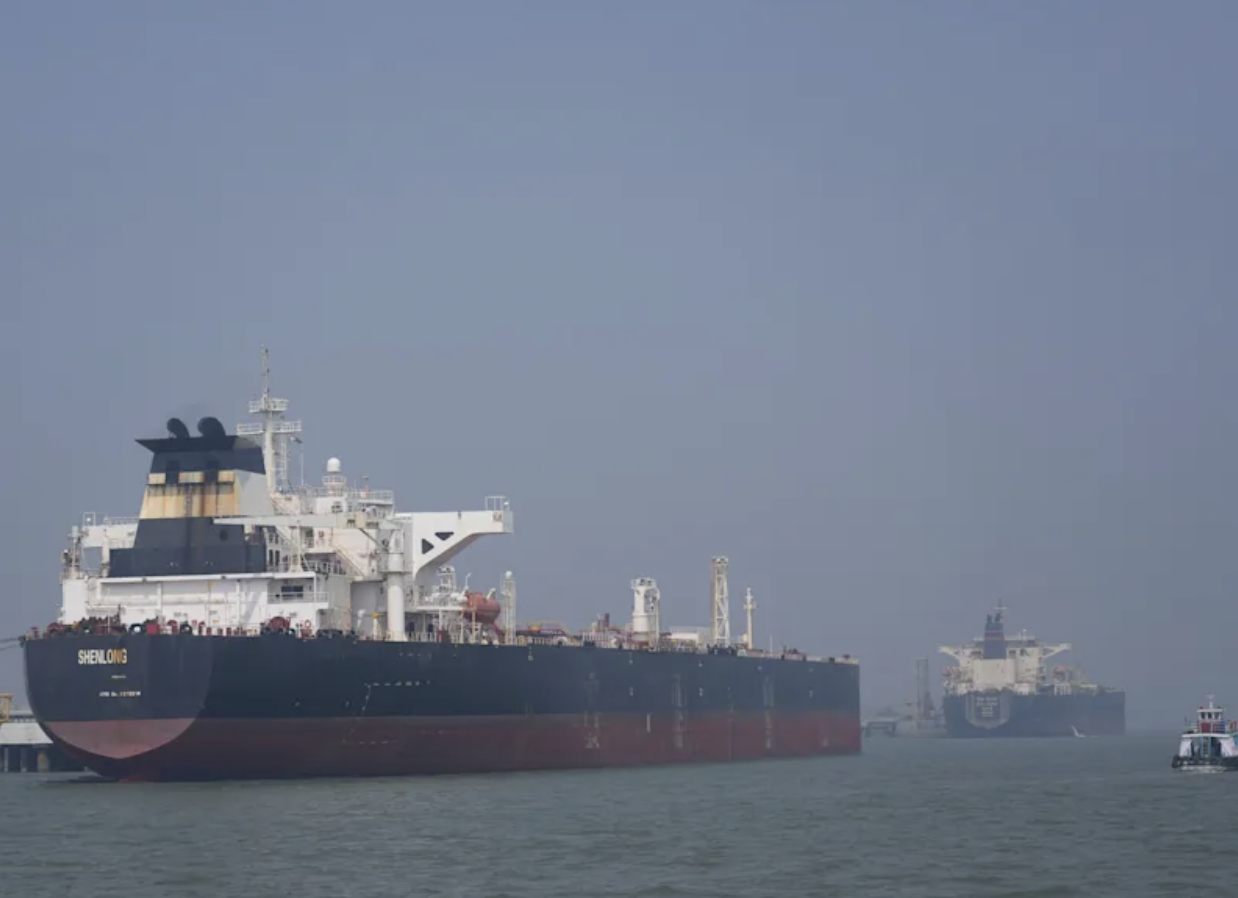
It is also a route for Saudi, Iraqi, Emirati, and Russian oil, supplying China, Japan, South Korea, and others. That is why closing it, or interfering with navigation there, would amount to a major energy shock, not something that can simply be framed as a penalty on Tehran. Even alternative routes such as Lombok and Sunda remain longer, more expensive, and less efficient.
Older U.S. naval analyses on blockading China suggest that choking Malacca would require a permanent presence, broad interception, and monitoring of alternative routes. In other words, it would look far more like a major strategic operation than a limited tactical measure. And with every step toward widening such a blockade, the chances increase that the crisis would shift from the Iran file directly to the China file.
China, for its part, would most likely not begin with a direct military response. Its first reaction would be economic and operational:
• drawing from stockpiles,
• increasing purchases from Russia, the Gulf, and Brazil,
• and rearranging supply routes.
EIA data show that China’s total imports reached 11.1 million barrels per day in 2024, giving it room to rebalance sources even if it lost part of the Iranian barrels.
But would Beijing see this as merely a commercial loss?
If Malacca turns into an American pressure tool, that would effectively prove that the nerves of the Chinese economy are still vulnerable to maritime pressure. At that point, the issue becomes bigger than Iran: it turns into a direct test of China’s ability to protect its lifelines, and an even stronger push toward stockpiling, diversification, and alternative supply routes.
What does America gain?
Washington would gain a highly coercive pressure card against Iran.
Depriving Tehran of the Chinese market would hit revenues, the currency, and the state’s ability to fund both itself and its regional arms. But the more effective this card becomes against Iran, the higher its geopolitical cost becomes for China, Asia, and the wider world. That is why the more realistic scenario may not be a literal closure of Malacca, but selective pressure on tankers, shipping networks, insurance channels, and intermediaries linked to Iranian oil. That would hurt Tehran without opening a full maritime front with Beijing.