
The latest:
Iraqi border guards closed two crossings previously run by the Kurdistan Regional Government, one with Syria and one with Iran, as Baghdad moves to tighten control over the semi-autonomous region. Border Forces commander Lt. Gen. Mohammed Abdul Wahab Sukkar al-Saeedi told the Iraqi News Agency the Walid crossing north of Rabia and the Sartak Bashta crossing in Halabja were shut Thursday.
Details:
- The order: Prime Minister and commander-in-chief Ali al-Zaidi issued the directive on Nov. 24, instructing federal authorities to close all unofficial crossings with neighboring states, including those inside the Kurdistan region. He acted after reviewing the report of an investigative committee into oil smuggling at the North Oil Company, according to the Iraqi News Agency.
- The court ruling: Iraq’s Federal Supreme Court ruled Wednesday that Baghdad may deploy federal forces along all international borders, including those falling within Kurdistan region territory. The two closures came a day later, with the Border Forces command announcing the start of implementation.
- Wider package: Al-Zaidi’s decisions also barred the KRG from authorizing exports of crude and refined products except through the federal Oil Ministry, and tasked the ministry with running oil fields in Diyala, Kirkuk, Salahuddin and Nineveh. The Defense Ministry was assigned to close unofficial side roads linking Kurdistan to those provinces.
- Erbil’s response: KRG Prime Minister Masrour Barzani rejected Baghdad’s decisions as “unacceptable” and called for the disputes to be resolved through legal and constitutional means. The disagreements center on crossing administration, oil exports, revenue distribution and the division of powers between the federal government and the region.
- The Syrian side: A government administrative source at one of the Syrian crossings told Al-Araby Al-Jadeed the Iraqi side closed Walid on Thursday without giving reasons or a duration. The crossing lies in the far northeast of Hasakah province near Malikiyah and is used for commercial freight, fuel transport and limited passenger movement.
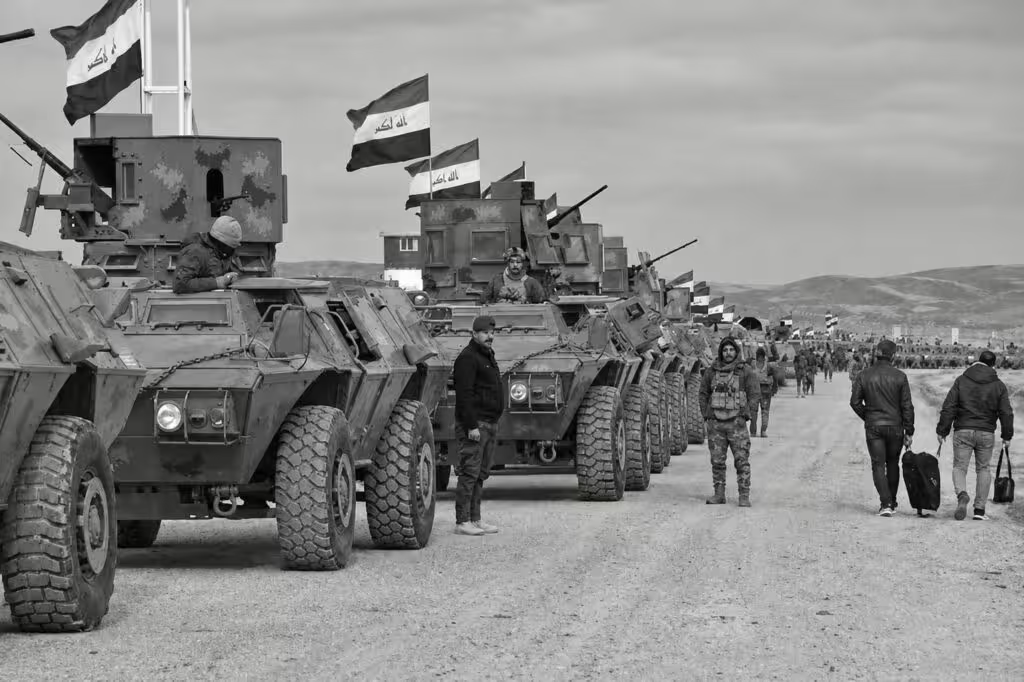
- Security framing: Al-Saeedi said the measures have substantially reduced infiltration, smuggling and labor crossings into Iraq, and claimed border forces had reached control levels not previously achieved. He said his troops secure 605 kilometers of frontier with Syria without other forces sharing responsibility.
- The borders: Iraq’s land borders with six neighbors run 3,650 kilometers, according to the national environment strategy for 2024-2030. The Iranian frontier is the longest at 1,458 kilometers, followed by Saudi Arabia at 814, Syria at 605, Turkey at 352, Kuwait at 240 and Jordan at 181.
- Official crossings: A customs list published by the UN Economic Commission for Europe in March 2025 recorded 13 approved land crossings under the international customs transit system, including eight with Iran. Three — Bashmaq, Parwezkhan and Haji Omaran — sit inside the Kurdistan region and are treated as official by Iraq’s Border Ports Authority.
- Unofficial list: The Border Ports Authority has previously named four crossings in the region as unofficial: Kela, Tawila, Siran Ben and Sirazeri. Authority head Omar al-Waeli said in January 2026 a report on unofficial crossing locations was submitted to parliament, without publishing names or a number.
- Scope undefined: Authorities did not state the total number of crossings slated for closure when announcing implementation. As of Thursday evening, the Border Forces command had announced two: Walid north of Rabia and Sartak Bashta in Halabja.
Background:
Three main crossings link Iraq and Syria: Qaim-Bukamal, Walid-Tanf and Rabia-Yaarubiyah. Qaim-Bukamal reopened to travelers and trucks in June 2025, fuel tankers resumed through Walid-Tanf in March 2026 ahead of its April 2 opening, and Rabia-Yaarubiyah reopened April 20, according to Syria’s SANA agency.
Between the lines:
The closures hit crossings Baghdad classifies as unofficial, but the prime minister’s package reaches beyond smuggling: it strips Erbil of export authorizations and hands federal ministries oil fields in four provinces. That the directive followed an oil-smuggling inquiry at North Oil Company ties border enforcement directly to the revenue fight Barzani is contesting on constitutional grounds.
What’s next
Watch how many additional crossings the Border Forces command announces closing, whether Erbil pursues the legal challenge Barzani signaled, and whether traffic between northeast Syria and the Kurdistan region shifts to Semalka or Rabia-Yaarubiyah.