
Key Points
- Iraq's four presidencies endorsed a national dialogue on December 1 over the constitutional dispute with Kurdistan.
- The initiative came from Judicial Council chief Faeq Zidan, who will sponsor the talks in Baghdad.
- Baghdad and Erbil are at odds over border crossings, oil fields and federal powers inside the region.
The latest:
Iraq’s four top leaders endorsed a national dialogue set for December 1 to resolve the constitutional dispute between the federal government and the Kurdistan Regional Government, according to a statement from the prime minister’s media office. The meeting also backed government measures against corruption and the smuggling of crude and refined products, and urged faster passage of the 2027 federal budget.
Details:
- The initiative: The dialogue was proposed by Supreme Judicial Council President Faeq Zidan and will be held under his sponsorship, the statement said. It is to bring together the four presidencies along with some concerned parties, or any party able to help reach solutions to the crisis in line with the constitution.
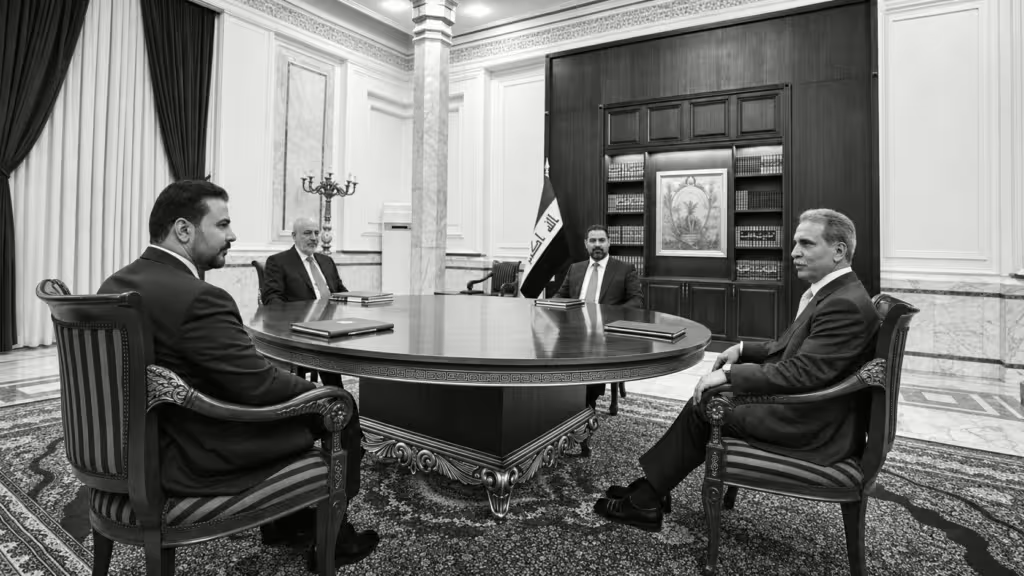
- Who attended: Wednesday’s meeting brought together Prime Minister Ali al-Zaidi, President Nizar Amedi, Parliament Speaker Haibat al-Halbousi and Zidan, according to the prime minister’s media office. The statement did not name which other parties would be invited to the December 1 session.
- The dispute: The move follows an escalating disagreement between Baghdad and Erbil over the administration of border crossings, oil fields, and the scope of federal government authority inside areas run by the Kurdistan Regional Government.
- Anti-corruption file: The participants backed government steps to fight corruption and counter the smuggling of oil and its derivatives. They stressed the need for coordination among oversight, security and judicial bodies to pursue and hold those involved accountable under the law, and to protect public funds and oil wealth.
- Security: The meeting praised government measures in Jurf al-Sakhar, known as Jurf al-Nasr, and underlined the importance of coordination between security forces and relevant bodies in managing the security file, preserving stability and strengthening state authority.
- The budget: On the economy, the leaders called for accelerating approval of the 2027 federal budget and for continued dialogue and understandings that safeguard the rights of the provinces and citizens’ interests under constitutional and legal entitlements. No date was announced for a parliamentary vote.
- Revenues: The participants stressed the need to maximize state revenues and diversify their sources to support the economy and finance development requirements, citing regional tensions and the fluctuation of global oil exports as the backdrop.
- Displaced Iraqis: The leaders agreed to work toward ensuring the return of all displaced people to their home areas, and to take the security, service and administrative measures needed to create conditions for a safe and dignified return and restore stability there.
Between the lines:
The choice of the judiciary rather than the executive to sponsor the dialogue is notable: Zidan convenes the talks, while the prime minister, president and speaker attend as participants. The agenda the four endorsed — anti-smuggling enforcement, the 2027 budget and provincial entitlements — overlaps directly with the oil and border-crossing issues that put Baghdad and Erbil at odds.
What’s next
The December 1 session in Baghdad is the next marker, including which additional parties take part and whether it produces an agreed constitutional formula. Parliament’s handling of the 2027 budget is the second signal to track.