
The latest:
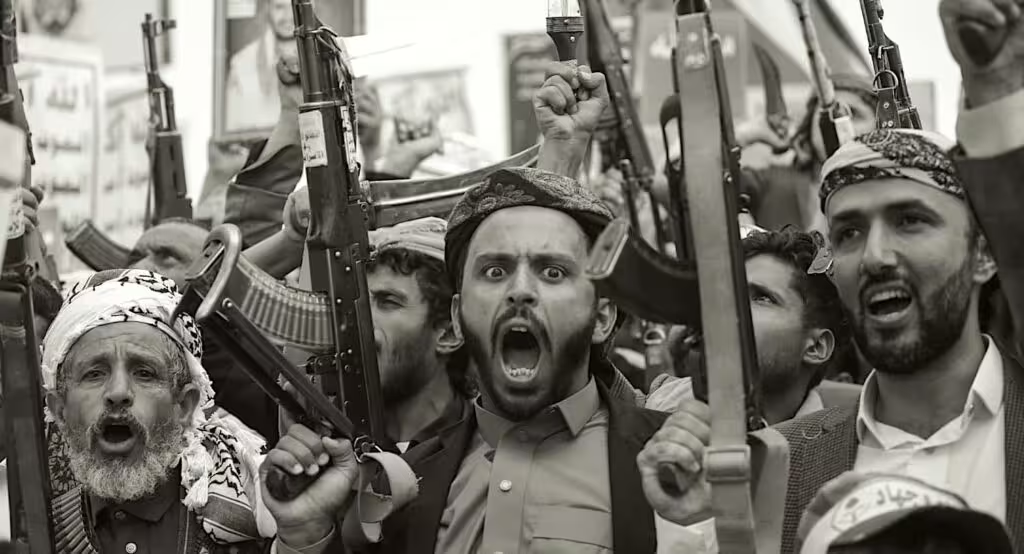
Britain on Tuesday imposed an asset freeze and director disqualification on the Houthi group, alongside asset freezes, travel bans and director bans on four senior officials accused of torture, rape and other abuses against detainees. The Foreign Office tied the move to attacks on international shipping in the Red Sea and Gulf of Aden, and to missile and drone strikes against regional partners.
Details:
- The group listing: The Houthi group was designated for activities threatening peace, security and stability in Yemen, according to the UK government, including escalating the internal conflict, attacks on vessels in the Red Sea and Gulf of Aden, and missile and drone attacks on regional partners.
- The four individuals: Abdulkarim Amir al-Din Hussein al-Houthi, interior minister in Sanaa since 2019, was listed over detention facilities where the UK says detainees faced electric shocks, beatings and sexual violence. Also listed: security and intelligence chief Abdulhakim Hashem Ali al-Khaiwani, judge Mohammed Mufleh, and senior prosecutor Sarim al-Din Mufaddal.
- Foreign secretary: Ed Miliband said renewed Houthi aggression against British partners and innocent civilians was unacceptable and must be met with accountability. He said the government would not stand by while such groups drive up the cost of living for British people and deliberately undermine Middle East stability.
- The economic argument: London said the group’s reckless conduct in the Bab al-Mandab strait continued to disrupt global supply chains and added pressure to household costs in Britain. The Foreign Office framed the designations as a message that it will always act in support of British values and interests.
- Legal basis: The group was listed under the Yemen (Sanctions) (EU Exit) Regulations 2020, the four individuals under the 2026 human rights and international humanitarian law sanctions regulations. The UK said the measure goes beyond the UN arms embargo by adding an automatic asset freeze and director disqualification.
- The totals: The UK now maintains 16 UN and UK sanctions on the Houthis, according to the government. It said it has led international efforts to strengthen the UN sanctions regime on Yemen, using its role as penholder on Yemen at the Security Council to increase pressure on the group.
- Humanitarian carve-out: The government said the measures target the Houthis and not the Yemeni people. The existing humanitarian exception remains in force, and the Treasury issued a general licence the same day to protect humanitarian activity and the commercial work supporting it.
- Aid and displacement: The UK said the decision to reignite the conflict has displaced hundreds of thousands of Yemenis. In September it announced 10 million pounds for the UN flash appeal, part of 104 million pounds in humanitarian support for Yemen this year.
- Parliament and Riyadh: Middle East minister Stephen Doughty announced the designations in a statement to Parliament, after updating MPs on Yemen on 12 November. He recently visited Saudi Arabia to restate British solidarity with Riyadh, which the UK says has faced intensified Houthi attacks on civilian infrastructure causing a number of deaths.
Between the lines:
The package is built on two separate legal tracks: a Yemen security regulation for the group and a human rights regulation for the four officials. That split lets London pursue maritime disruption and detainee abuse as distinct cases, while the simultaneous Treasury general licence signals an attempt to pressure the group without choking the aid economy in Yemen.
What’s next
Watch whether further names are added under the 2026 human rights regulations, how the Treasury general licence is applied by banks and shippers, and whether the UK pushes new listings through the UN Security Council Yemen file.