Key Points
- Trump said Washington no longer needs an Iran deal, citing frozen funds and the Strait.
- Oil rose after the comments, erasing losses driven by higher Saudi output.
- A rejection of diplomacy leaves shipping attacks and oil spills as the region's live risk.
The latest:
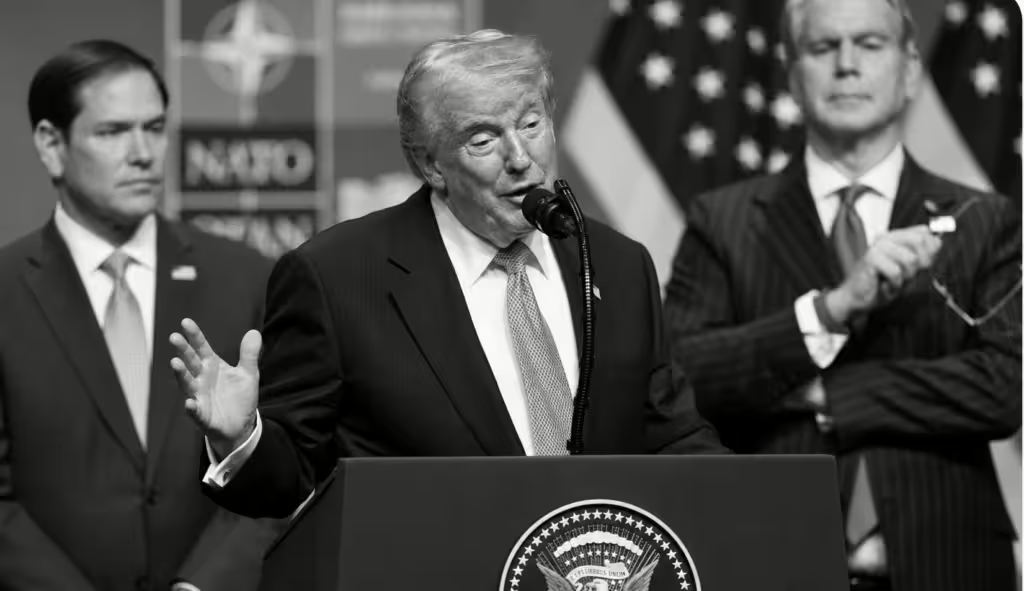
The United States no longer needs a deal with Iran, President Donald Trump said, writing on Truth Social that those days have long since passed and that Washington already holds hundreds of billions of dollars of Iranian money as well as the Strait of Hormuz. Oil prices rose shortly after the comments, reversing an earlier decline that followed Saudi Arabia raising output to near prewar levels.
Details:
- The post: Trump said Vice President JD Vance would instead devote his complete and total attention to what the President described as large-scale corruption and crime in Democratic-led states, naming Minnesota, California and Illinois. The post did not set out any alternative track for dealing with Tehran or reference the Islamabad agreement.
- Hormuz blasts: The Islamic Revolutionary Guard Corps said two supertankers exploded in the Strait of Hormuz, a waterway that carried close to one fifth of global crude exports before the war. The IRGC statement did not name the vessels or assign responsibility.
- Separate strike: The UK Maritime Trade Operations said a tanker travelling eastbound in the Arabian Gulf was struck by an unknown projectile, with a number of casualties taken ashore for treatment. All remaining crew were safe and accounted for, UKMTO said, adding there was no immediate assessment of damage or environmental impact.
- Oman’s response: Oman’s National Committee for Emergency Management reviewed efforts on an oil tanker that ran aground off Al Qibliya Island, including progress handling its cargo, Oman News Agency reported. Officials did not identify the tanker or say when it ran aground. The committee also reviewed incidents off Musandam Governorate and mechanisms for responding to marine contamination.
- Spill risk: Oil spills from attacks on tankers in the Strait have been threatening the UAE and Omani coasts, with monitoring of potential pollution now part of the Omani committee’s work.
- Espionage convictions: Woolwich Crown Court convicted two Iranian men of spying on dissident journalists in Britain for the IRGC. Mostafa Sepahvand, 41, was found guilty of two offences and Farhad Javadi Manesh, 46, of one, under the National Security Act. Both are to be sentenced next month.
- Police assessment: Vicki Evans, Britain’s senior national co-ordinator for counter-terrorism policing, said Sepahvand was directed by the IRGC or by middlemen for Iranian intelligence, and that the case “highlights the continuing and increasing threat to the UK from Iran”.
- Tehran’s denial: Iran has repeatedly denied involvement in spying or similar activity. Foreign Minister Abbas Araghchi said he was disturbed by the arrests of Sepahvand and others in May 2025.
- Diplomatic push: Pakistani Prime Minister Shehbaz Sharif and Turkish President Recep Tayyip Erdogan stressed de-escalation and dialogue at the Cop31 Leaders’ Summit in Antalya. Erdogan welcomed Pakistan’s mediation leading to the Islamabad agreement between Iran and the US, and both urged all parties to adhere to their commitments.
- Tehran at Antalya: Iranian President Masoud Pezeshkian met Erdogan on the sidelines of the Cop31 climate talks, Iran’s presidency said. The two called for greater regional co-operation to maintain stability, prevent tensions escalating, and stop insecurity spreading across the region.
Background:
The Strait of Hormuz handled nearly one fifth of the world’s crude exports before the US-Israeli war on Iran. The Islamabad agreement, mediated with Pakistani involvement, is the framework Ankara and Islamabad are now urging both sides to honour.
Between the lines:
Trump’s rejection of a deal sits against a diplomatic track others are still defending: Erdogan credited the Islamabad agreement, and Pakistan, Turkey and Iran all pressed for de-escalation at Antalya. The oil market read the comments as risk, not relief, rising even after Saudi Arabia restored output. Meanwhile the UK convictions keep a separate, non-maritime front open.
What’s next
Sepahvand and Javadi Manesh are due to be sentenced next month. Watch whether Washington names any alternative to a deal, whether UKMTO identifies the projectile’s source, and whether Oman reports pollution off Musandam.