The latest:
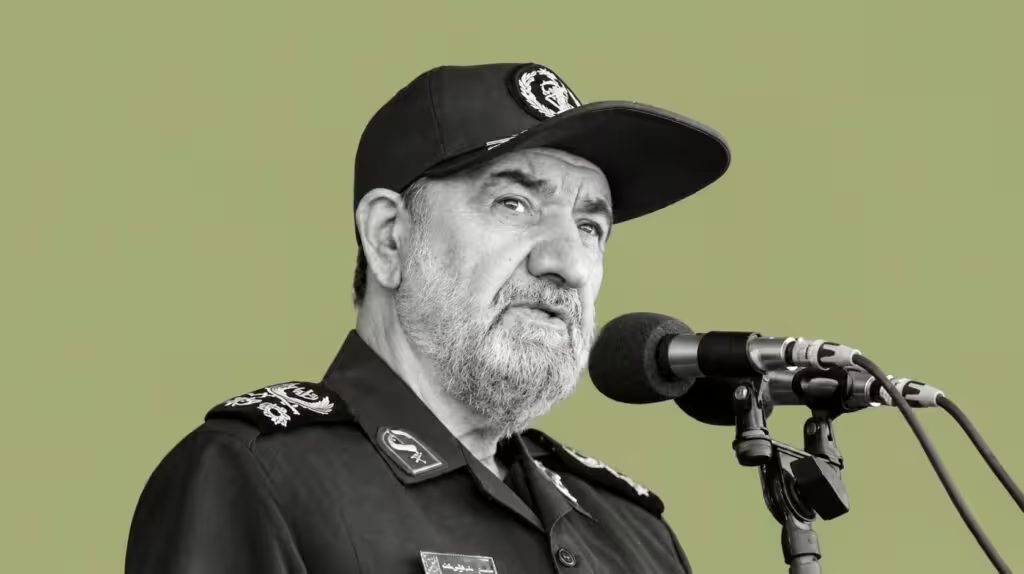
Not a single particle of enriched nuclear material will be allowed out of Iran, Mohsen Rezaei, secretary of Iran’s Supreme National Security Council, told Lebanon’s Al-Mayadeen on Wednesday. He warned that fresh American strikes would be answered by hitting distant US bases, and said no talks are currently under way between Tehran and Washington, according to Reuters.
Details:
- The stated purpose: Rezaei said Iran needs the enriched material to design nuclear-powered ships and submarines, and that Tehran has informed Moscow the stockpile will stay inside the country. Russia has periodically offered to take Iranian uranium onto its territory as a de-escalation step, while saying the decision rests with Tehran.
- The quantity: The International Atomic Energy Agency estimates Iran held 440.9 kilograms of uranium enriched to 60% purity — far above civilian requirements — when Israel and the United States struck Iranian nuclear sites in June 2025. How much of that stockpile survived has not been established.
- The standing order: Two senior Iranian sources said in May that the supreme leader had issued a directive barring any shipment of near-weapons-grade uranium abroad, Reuters reported. Rezaei’s remarks restate that line publicly at the level of the security council.
- The bounty row: Foreign Minister Abbas Araghchi urged the UN secretary-general, the Security Council and the IAEA chief to condemn a US offer of up to $20 million for information on Iran’s nuclear facilities, equipment and personnel, calling the announcement “abhorrent and regrettable” in a letter to the three.
- The US case: The State Department announced the reward on 6 November through its Rewards for Justice programme, adding possible relocation for informants. Washington said gaps in international monitoring, which it attributed to Iran’s failure to meet safeguards obligations, have left inspectors unable to fully track parts of the programme.
- Inspections frozen: Araghchi argued Tehran cannot be expected to carry out routine safeguards work under threats of sabotage and assassination. Since the June 2025 conflict, Iran has barred IAEA inspectors from the bombed sites at Fordow, Natanz and Isfahan.
- The diplomacy: A senior Iranian official told Reuters last week that Tehran sent a nuclear proposal to Washington through Qatar, to be discussed only after the US meets seven Iranian demands, including unfreezing assets and lifting sanctions in exchange for reopening the Strait of Hormuz.
- The sequencing dispute: Washington insists nuclear issues form part of any preliminary talks to end the war, while Araghchi has said discussion of the programme comes at a later stage. Qatari and Pakistani mediation has sought to bridge the gap.
- Washington’s tone: US officials have played down the need for further military action, and analysts noted a less combative tone from President Donald Trump since Republicans lost the 3 November midterm elections. Trump has repeatedly said Iran’s nuclear programme was effectively destroyed by American strikes.
Background:
The US withdrew in 2018, during Trump’s first term, from the Obama-era agreement that capped Iran’s nuclear activity in return for sanctions relief. Israel, the US and other Western states accuse Tehran of seeking nuclear weapons; Iran denies this and says its programme is civilian.
Between the lines:
Rezaei’s framing — submarines and ships rather than bargaining material — removes the one concession Russia had offered to broker and Washington had treated as a measure of Iranian intent. With inspectors still locked out of Fordow, Natanz and Isfahan, and the surviving share of the 440.9 kilograms unestablished, neither side can verify the other’s claim: Tehran’s that the material is for propulsion, Trump’s that the programme is gone.
What’s next
Watch for a US response to the seven Iranian demands relayed through Qatar, any UN or IAEA reply to Araghchi’s letter, and whether inspectors regain access to Fordow, Natanz and Isfahan.