Key Points
- Israel's president tasked Gadi Eisenkot with forming a government, sidelining Netanyahu for now.
- Factions holding 67 seats backed Eisenkot; 46 recommended Netanyahu after the October 27 election.
- Arab parties supplied the decisive numbers but may not join or sustain his coalition.
The latest:
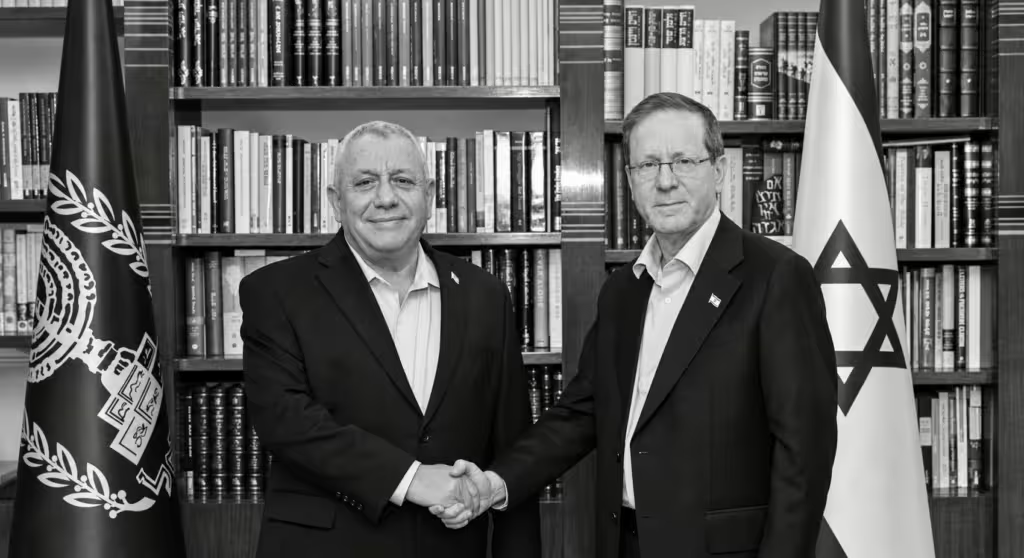
Former military chief Gadi Eisenkot has been given the first opportunity to build Israel’s next governing coalition, after President Isaac Herzog completed consultations with party leaders. The president’s office said late on Saturday that Eisenkot had been informed and invited to formally receive the mandate at 5pm on Sunday. Netanyahu’s Likud remains the largest single party in the 120-seat Knesset.
Details:
- The arithmetic: Representatives of parties holding 67 seats recommended Eisenkot to the president, against 46 legislators who backed Netanyahu, according to The National. The ultra-Orthodox United Torah Judaism faction, which holds seven seats, declined to endorse either man, leaving a bloc unattached as coalition talks begin.
- The results: Official Knesset results show Likud won 27 seats and Eisenkot’s Yashar party 21, making Netanyahu’s party the largest despite his setback. Across blocs, Netanyahu’s allied camp took 53 seats and Eisenkot’s 48 — neither reaching the 61 needed for a majority.
- Eisenkot’s response: Eisenkot said on X that the moment calls for a national emergency government and pledged to prove worthy of it. He did not name the parties he intends to approach, nor set out which portfolios or policy conditions would anchor such a government.
- The Arab bloc: The Joint List and Raam, the two main Arab-majority entities, hold a combined 19 seats and their recommendations helped Eisenkot clear a majority of factions. The National reported that this gives them considerable leverage over the negotiations now opening.
- The obstacle: Eisenkot and several allies have resisted depending on Arab-majority parties even for outside support, over fears of a voter backlash, according to The National. Opening the door to his nomination is a far lighter commitment than delivering votes on confidence motions and budgets.
- The precedent: Former prime minister Naftali Bennett, now part of Eisenkot’s alliance, previously led a government backed by Raam, showing such cooperation has been done before. That experience sits inside the camp Eisenkot must now hold together.
- The options: Three routes are on the table: a minority government relying on Arab legislators in key votes without formal coalition membership; a deal with ultra-Orthodox parties that have traditionally sided with Netanyahu; or a unity government including Likud.
- The Likud problem: A unity arrangement runs into Eisenkot’s own record: he has repeatedly criticised Netanyahu’s leadership and previously ruled out serving under him. No public signal has emerged that either man is revisiting that position.
- The clock: Eisenkot has 28 days to assemble a government once he formally receives the mandate, with Herzog authorised to grant an extension of up to 14 days. Failure returns the file to the president, who may hand the task to another politician — potentially giving Netanyahu a second chance.
Background:
Netanyahu’s far-right coalition lost its parliamentary majority in the October 27 election. Under Israeli practice, the president consults party leaders and awards the mandate to the candidate judged most likely to assemble 61 seats, rather than automatically to the largest party’s leader.
Between the lines:
The gap between 67 recommendations and a working majority is the whole story. Nineteen of those seats come from Arab-majority parties whose votes Eisenkot’s own camp has been reluctant to rely on, and seven ultra-Orthodox seats stayed neutral. His alliance holds 48 seats against Netanyahu’s 53 — any durable government requires crossing one of the two lines he has avoided.
What’s next
Eisenkot is due to receive the mandate at 5pm on Sunday, starting a 28-day clock. Watch whether United Torah Judaism shifts, whether Raam and the Joint List extract public conditions, and whether Eisenkot softens his refusal to serve with Netanyahu.