The latest:
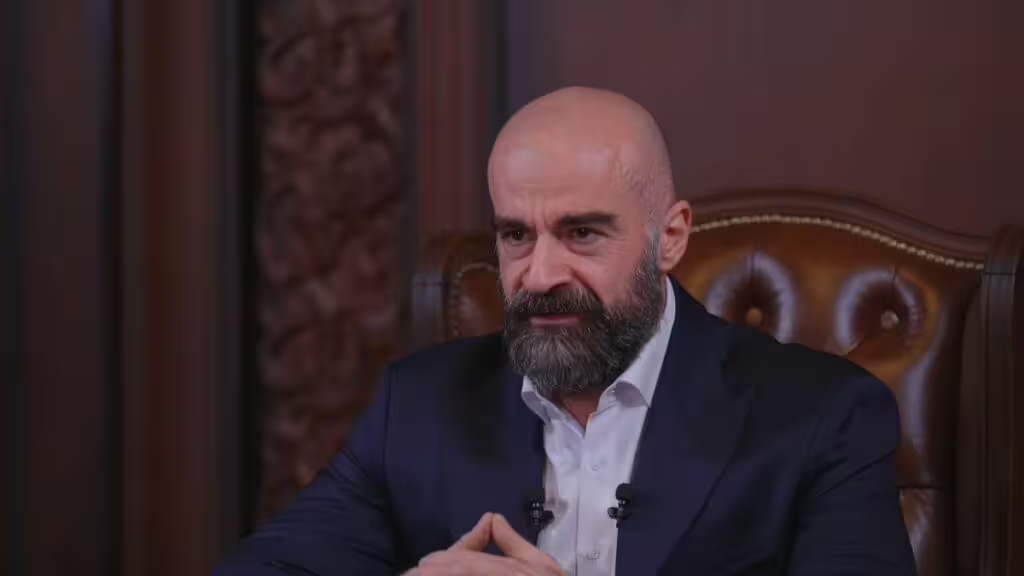
The Patriotic Union of Kurdistan is quitting the Kurdistan Regional Government, party leader Bafel Talabani announced Thursday after a leadership council meeting in Sulaymaniyah, saying his party recognizes neither the Kurdistan parliament session held a day earlier in Erbil nor anything it produces. He pledged to match every post the KDP fills in Erbil with an equivalent appointment in Sulaymaniyah, while ruling out violence.
Details:
- The trigger: The KDP reconvened the Kurdistan parliament in Erbil on Wednesday for the first time since its inaugural 2 December 2024 session, electing a new presidency board with 52 lawmakers present. Rival parties boycotted formally, but the KDP reached the 51-seat quorum in the 100-seat chamber by drawing deputies from competing blocs.
- Talabani’s case: Talabani said the current cabinet has been a caretaker government for two years and delivered nothing to citizens, citing gaps between fuel and oil prices in the Kurdistan Region and Baghdad as evidence of failure. He said every time progress was made on forming a government, it was sabotaged.
- Parallel institutions: Talabani warned that if the KDP appoints a region president, forms a cabinet or names ministers, the PUK will do the same in Sulaymaniyah. He described the region as the PUK’s own and said his party had sacrificed blood for it, while pledging not to allow a single drop of Kurdish blood to be spilled.
- The separation plan: A source in Sulaymaniyah said the PUK leadership decided to abandon negotiations within the existing framework and pursue a separate federal region through Iraqi constitutional mechanisms, with the process expected to begin in the coming weeks. Rudaw reported that KRG Deputy Prime Minister Qubad Talabani and the PUK’s ministerial team would leave their Erbil offices.
- The legal route: Article 119 of the Iraqi constitution allows one or more governorates to launch region formation via referendum, requested through a third of the provincial council or 10% of registered voters. The 2008 implementation law requires an initial petition backed by 2% of voters before registration reaches the 10% threshold.
- The obstacle: Article 117 explicitly recognizes the Kurdistan Region as an existing federal region, and neither article sets out a procedure for a governorate to withdraw from one already recognized. A separation bid could therefore require a Federal Supreme Court ruling or new legislation, extending the timeline well beyond a referendum alone.
- The KDP response: The KDP said the parliament session was not a victory for one side or a defeat for another but a win for all Kurdistan. New speaker Vala Fareed told visiting consuls that reactivating the chamber protects the region’s constitutional entity, targets no political force, and that the two-year delay had threatened the region’s survival.
- Washington’s line: A US State Department spokesperson, speaking on condition of anonymity, told Kurdistan 24 that the United States supports a strong and resilient Kurdistan Region as a cornerstone of the broader US-Iraq relationship, and urged all parties to work quickly to strengthen Iraqi institutions. The statement did not address the withdrawal directly.
Background:
The PUK has held de facto control of Sulaymaniyah since the 1990s Kurdish civil war, which produced two separate administrations. Even after the 2006 reunification, the KDP and PUK kept separate security forces, intelligence services and administrative structures in their territories.
Between the lines:
The parliament the KDP now presents as an institutional achievement was itself shut down by force in 2015, when KDP security barred then-speaker Yousif Mohammed of Gorran from entering Erbil for nearly two years. That precedent helps explain why the PUK treats Wednesday’s quorum, assembled from rival blocs over their formal boycott, as illegitimate rather than procedural.
What’s next
Watch whether the PUK files the initial 2% petition in the coming weeks, whether the KDP proceeds to name a region president and prime minister, and whether the Federal Supreme Court is asked to rule.