Key Points
- Representative Haley Stevens endorsed Republican Mike Rogers over Democratic nominee Abdul El-Sayed, citing his rhetoric on Israel.
- A Times/Siena poll in May found three-quarters of Democratic voters opposed U.S. economic or military support for Israel.
- The rupture signals Israel will shape Democratic fights in the next Congress and the 2028 primary.
The latest:
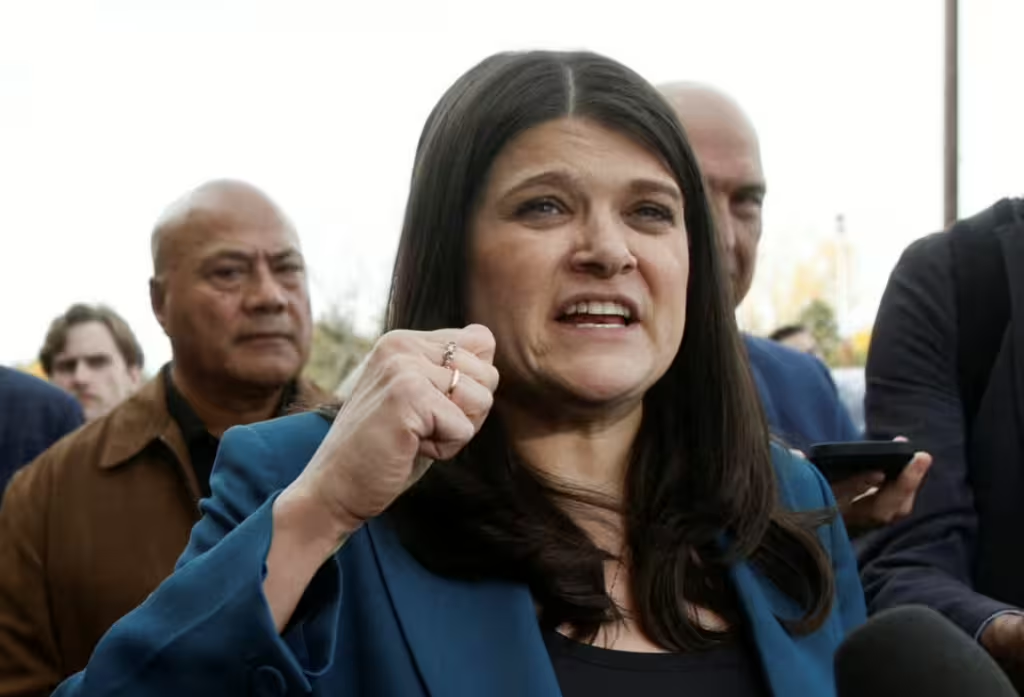
Days before Tuesday’s midterm elections, Representative Haley Stevens pulled her endorsement of Dr. Abdul El-Sayed, the Michigan Democrat who beat her in the Senate primary, and backed the Republican nominee, Mike Rogers, a former congressman. She cited El-Sayed’s rhetoric on Israel among her reasons. The New York Times reported that the move stunned fellow Democrats in a race the party had hoped to keep clear of the issue.
Details:
- The trigger: Stevens last week demanded that El-Sayed disavow an outside group’s advertisement she described as antisemitic, and called on him to apologize for past comments on Israel. Standing with Rogers near a Detroit church, she also pointed to support El-Sayed had received from the streamer Hasan Piker, a fierce critic of Israel.
- The ad: The video showed a grocery shopper blaming Israel for rising living costs in the United States. El-Sayed condemned it on Saturday, saying he did not agree with its contents, but declined to disavow Piker and cast Stevens’s criticisms as distractions. Piker, in a text message, called her move a selfish stunt.
- The nominee’s position: El-Sayed supports ending U.S. aid to Israel and has said Israel is not actually a friend of the United States. After winning the primary he said his commitment to Jewish safety matched his commitment to the safety of his own daughters. The Michigan Democratic Jewish Caucus has declined to endorse him.
- The numbers: A New York Times/Siena poll in May found three-quarters of Democratic voters opposed U.S. economic or military support for Israel. Polls also show Israel policy ranks low among most voters’ priorities, yet the Times reported it has fractured some of the party’s most loyal constituencies.
- Congress split: In a July House vote, Democrats were almost evenly divided on a measure to end aid to Israel. Representative Hakeem Jeffries, seen as the likely speaker if Democrats win the House, voted against it. Minority Whip Katherine Clark of Massachusetts voted for it.
- Primary fallout: Brad Lander, a Jewish New York Democrat who has accused the Israeli government of genocide, defeated Representative Dan Goldman by more than 30 points in a district with a considerable Jewish population. Goldman had accepted the endorsement of AIPAC, the pro-Israel lobbying group.
- The incoming class: The Times reported the new House Democratic class is poised to be far more skeptical of Israel, including Darializa Avila Chevalier of New York, who unseated a longtime incumbent, and Representative Analilia Mejia of New Jersey, who has accused Israel of genocide and is favored to keep her seat.
- Jewish voters divided: Andrew Bank, 37, of Ann Arbor said he planned to vote unhappily for El-Sayed, asking whether Jewish people can trust the progressive left to protect them. Rabbi Josh Whinston declined to say how he would vote but said El-Sayed’s rhetoric offered potential permission for people with radical views to do harm.
- 2028 spectrum: Representative Alexandria Ocasio-Cortez accuses Israel of genocide and opposes all U.S. military aid, including defensive systems. Senator Jon Ossoff has opposed certain weapons transfers but stopped short of a genocide accusation. Senator Cory Booker, a supporter of Israel, suggested in September that El-Sayed was a fringe candidate.
- The pushback: Representative Josh Gottheimer of New Jersey has vowed to fight Democrats who portray Israel as a pariah. On Friday he framed the Stevens-El-Sayed feud as a question facing the whole party, writing that a candidate can be for lower costs and stand up to hate at the same time.
Background:
Michigan sits at the center of the argument. The Detroit area is home to one of the largest Arab American populations in the United States alongside a large Jewish community, making the state a recurring test of how far Democrats can move from longstanding support for Israel without fracturing their coalition.
Between the lines:
If El-Sayed wins a swing state with a relatively large Jewish population after campaigning on ending U.S. aid, progressives who argue the party moved too slowly since the Gaza war gain their strongest evidence yet. The near-even July House vote suggests Jeffries would inherit a caucus with no settled position, and an incoming class described as more skeptical would widen that gap rather than close it.
What’s next
Tuesday’s result in Michigan is the first test. Then watch whether Democrats win the House and Jeffries becomes speaker, how the new class votes on Israel aid measures, and whether 2028 contenders harden their positions.