The latest:
A covert procurement network of more than 5,000 military and financial entities allowed Iran to keep importing explosives, drone and missile components and heavy trucks throughout this year’s war, Reuters reported in an investigation conducted with risk-analysis firm 240 Analytics. One entity alone, VDJA 346428, imported $2.3 billion in military goods between January 2025 and June 2026, according to records from trade platform ImportGenius.
Details:
- The naming pattern: Reuters reported that every entity is listed under the Persian initials of the Defence Ministry followed by a five- or six-digit number spelled out in words. All share the Tehran address of the Defence Ministry and the Armed Forces Logistics organisation, and all are registered on 11 February 1979, though most became operationally active in 2013.
- The money trail: 240 Analytics chief analyst Noam Binstock told Reuters he found the entities in June 2025 in Bank Sepah documents posted on WikiIran. He said 36 held $1.2 billion in foreign-currency deposits at the end of 2024, while the rest held about $1.8 billion in local currency, averaging roughly $360,000 per account.
- How payments move: Reuters found that 97% of the shipments it reviewed were settled without any transfer of funds, avoiding sanctions alerts. Trusted intermediaries among Iranians living abroad bought the goods with money already deposited in foreign banks, then shipped them to Iran.
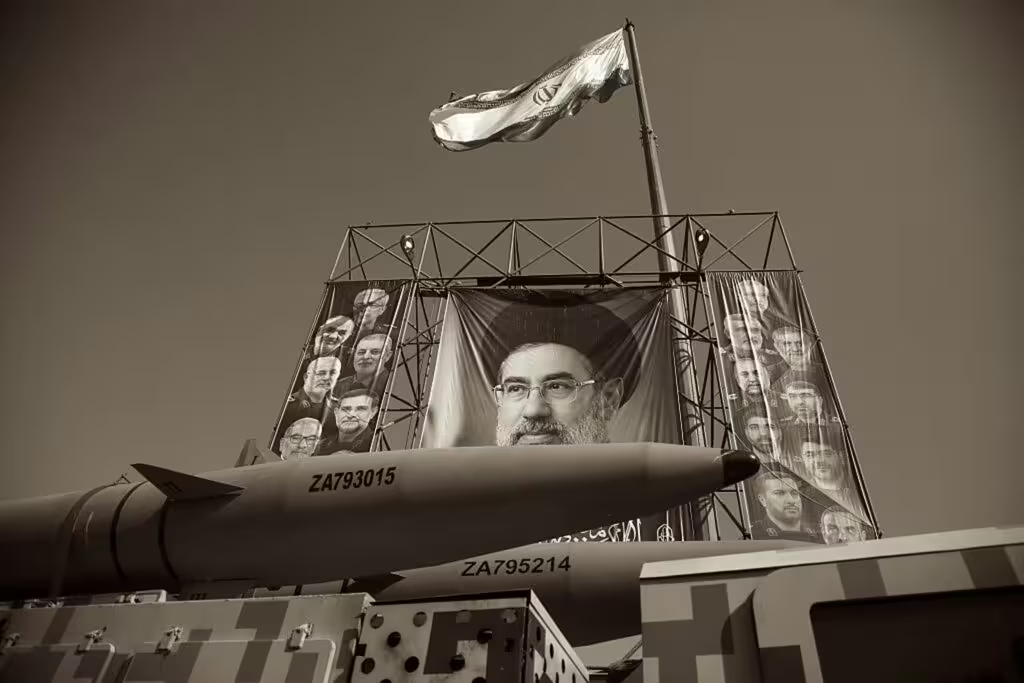
- What was shipped: Import databases for the first six months of this year listed $1.9 million in detonators, tonnes of explosives, aircraft engine parts, rocket-fuel components and heavy launch vehicles. Weapons and sanctions experts told Reuters all of these can serve as core components for ballistic missiles and drones, including Shahed models.
- The China route: Reuters reported that VDJA 346428 imported 886 tonnes of Chinese-origin chemicals through Bandar Abbas between January and April 2025, under a customs code covering perchlorates used in solid rocket fuel. China’s foreign ministry said it was not aware of the situation described and rejected malicious attempts to link regional fighting to China.
- The Bandar Abbas blast: Three days after the last of those shipments arrived, a massive explosion hit the port on 26 April, killing at least 70 people and wounding more than 1,200. Two people familiar with the blast said sodium perchlorate ignited inside dockside containers; state media said the chemicals were stored by Sina Ports, owned by the sanctioned Mostazafan Foundation.
- The truck chain: Between January 2025 and June 2026 the same entity imported 435 Iveco trucks, which Reuters tracked by satellite imagery to a customs yard outside Tehran in February 2025, matching three vehicle identification numbers. Iveco said any presence of its trucks in Iran occurred outside the group’s control and responsibility.
- The European link: Hundreds of millions of dollars in trucks, aircraft engine components and electronics came from Germany and elsewhere in the European Union, including $34 million in Iveco vehicles, all documented under VDJA 346428. An EU spokesperson said member states are responsible for enforcing the bloc’s sanctions.
- Trump’s position: On 12 October, US President Donald Trump wrote on social media that he did not believe China and Russia were supporting Tehran, and that any such support would be very limited. Import records reviewed by Reuters show Russian detonators worth $1.9 million arrived in June 2026, the last of five Russian shipments totalling $7.6 million since early 2025.
- No designations: Though Iran’s military has faced Western sanctions for decades, Reuters found no evidence that any entity named in the documents had been placed on a Western sanctions list. The US Treasury, the White House, US Central Command and Russia’s defence ministry did not respond to requests for comment.
Background:
Much of Iran’s economy is controlled by parastatal foundations known as bonyads, many created after the 1979 revolution from assets seized from the Shah’s family. Washington and Brussels have sanctioned several of them over years, saying they entrench elite power and fund repression.
Between the lines:
Two findings sit awkwardly together: Trump said on 12 October he saw no Russian or Chinese support for Tehran, while the shipping records Reuters reviewed list Chinese perchlorates and Russian detonators arriving in that window. The absence of any of the 5,000 entities from Western designation lists suggests the gap is less about intelligence than about enforcement reaching a structure built specifically to leave no money crossing borders.
What’s next
Watch whether Washington or the EU designates any VDJA-numbered entity, whether the naval blockade reimposed in mid-July slows monthly import volumes below the $77 million recorded in May, and any Iranian official response.