Key Points
- Iraq closed the Shib crossing with Iran before dawn Tuesday, the second shutdown in a month.
- Local sources cite a sonar malfunction; others point to fears of fresh attacks on Gulf states.
- Tehran protested publicly, and Baghdad has issued no official explanation of the closure.
The latest:
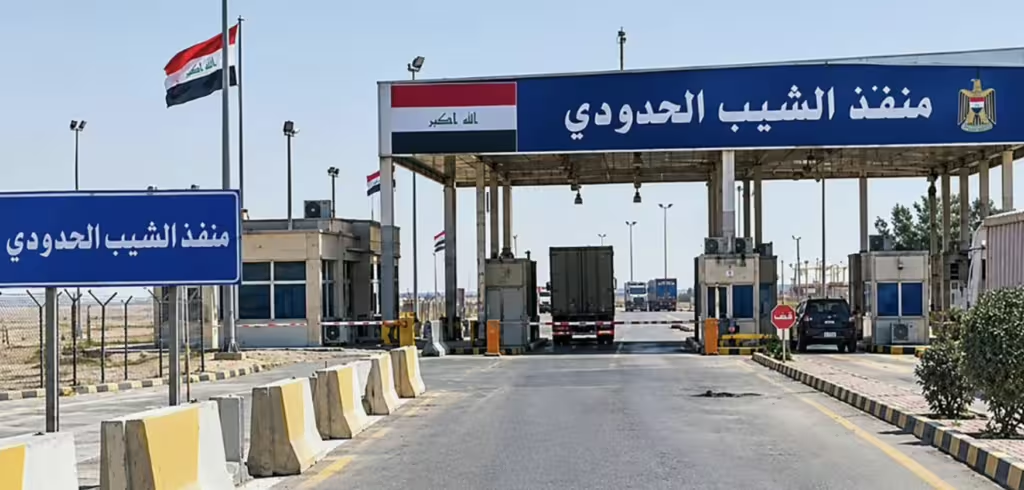
Iraq shut the Shib border crossing with Iran before dawn on Tuesday, the second closure in a month, as surveillance tightened around sites in Maysan province suspected of being used to launch attacks. Iran’s interior ministry spokesman Zeini Vand told a press conference that Baghdad closed the crossing without prior notice to the Iranian side.
Details:
- The official account: Local sources in Maysan told Al-Mada the version circulating in the province describes a closure of only a few hours, blamed on a malfunction in the sonar equipment used for inspections. Baghdad has issued no statement explaining the reasons, the duration, or whether security measures beyond the stated technical fault are involved.
- The other account: Other sources told Al-Mada that information is circulating about the possible execution of new attacks on Gulf states. Monitoring was intensified again over the past two weeks around locations suspected of being usable for such attacks, particularly with rising tension between Saudi Arabia and Yemen.
- The attack timeline: Attacks on Saudi Arabia began in July from areas in the Najaf desert, then moved in September to the vicinity of the Shib crossing in Maysan, near the Iranian border. Security assessments had ruled out a return by the perpetrators to the same site twice, given the tightened security that followed.
- What Baghdad conceded: Iraq acknowledged only the second attack. Sources told Al-Mada that 8 Iraqi-Saudi meetings were held, most of them in Riyadh and with American participation, which included accusations that the attacks were launched from Iraqi territory starting last May.
- The unanswered question: Despite investigations and the dismissal of security commanders in Maysan, Baghdad has not identified the perpetrators. Hypotheses ranged between infiltration by Iranians or Houthi involvement, while the armed factions were excluded from the circulating accusations because of the disarmament negotiations, despite their threats against neighboring states and American interests.
- The shadow model: Assessments point to the possible execution of the attacks by small groups of 5 to 10 people operating in the style of what are known as the shadow factions, with Maysan treated as the first testing ground for this pattern. The groups are described as part of the unity of fronts framework.
- Earlier closures: In September, 3 border crossings with Iran were closed for hours before reopening under pressure from Shiite forces, amid accusations that Baghdad was taking part in the blockade of Tehran. The border ports authority later said stockpiled vegetable consignments were admitted on the instruction of Prime Minister Ali Faleh al-Zaidi.
- The American pressure: The Shib closure coincides with information about American demands for additional border measures, in parallel with Pakistan’s announcement that it was closing its own crossings with Iran. Circles close to al-Zaidi said he had earlier sought to open Najaf airport to Iranian aircraft, despite an American decision barring Iranian flights in the region.
- The analysts: Ihsan al-Shammari of Baghdad University assessed that the closure carries political and security significance rather than a technical one, linking it to the possibility of renewed war between Washington and Tehran. Independent politician Mithal al-Alusi assessed that the new government, drawn from the Coordination Framework, is under pressure to prove it is not an extension of Iranian policy.
- The domestic front: The Coordination Framework has given al-Zaidi room to move on confining weapons to the state, starting with media rhetoric rejecting the step. Al-Shammari described the measures against incitement as a long-overdue advance, saying accountability must move beyond statements to actual legal action.
Background:
Iran established the unity of fronts framework two years ago, linking allied armed groups across several countries into a single escalation architecture. Iraq sits within that geography, which is why Baghdad treats border control as war-avoidance rather than routine customs management.
Between the lines:
Al-Shammari assessed that Baghdad is using preemptive measures to keep itself out of a war, and to send reassurance to Arab states and Washington that it is closing security gaps. Al-Alusi went further, assessing that closing the crossings is an attempt to absorb Western anger, and that a fragile government could face a rapid cutoff of dollar flows if it fails to demonstrate distance from Tehran.
What’s next
Watch whether the closure extends to additional crossings, whether Baghdad issues any official explanation, and whether the disarmament track moves from statements to prosecutions of figures accused of incitement.