Key Points
- Gulf states have built clustered museum districts from Saadiyat Island to Doha, Diriyah and Muscat.
- Abu Dhabi logged 26.6 million visitors in 2025, with 8.6 million visits to cultural sites and libraries.
- Fairs and auctions are arriving, but sustained galleries, collectors and artists' careers remain unproven.
The latest:
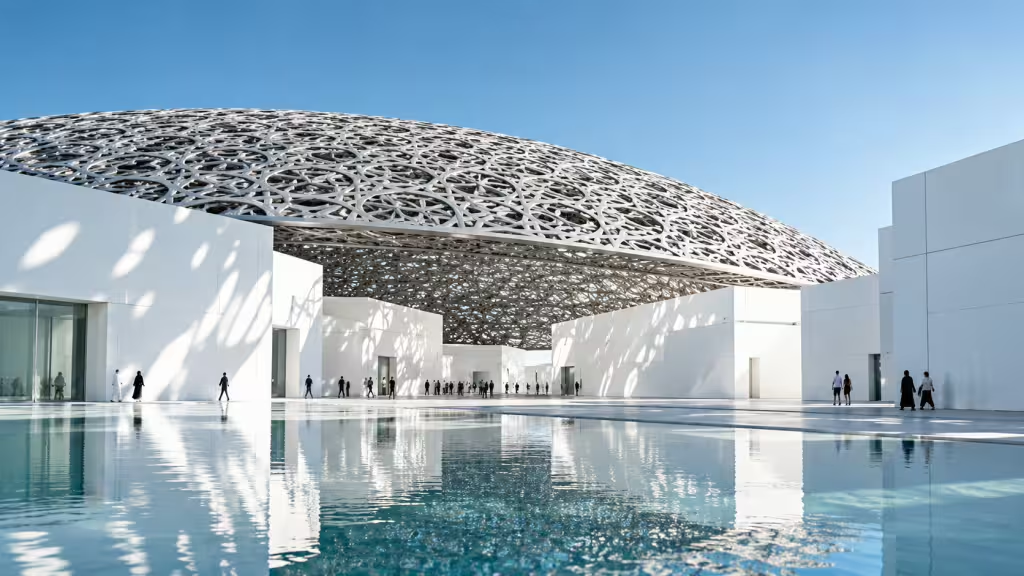
Abu Dhabi’s Saadiyat Island added two major museums in late 2025, completing a cultural district that now anchors the Gulf’s most concentrated bet on culture as economic infrastructure. Zayed National Museum opened in December and the Natural History Museum Abu Dhabi a month earlier, joining Louvre Abu Dhabi and teamLab Phenomena. A Frank Gehry-designed Guggenheim is still to come.
Details:
- The cluster: Saadiyat groups institutions with separate remits inside one district, giving visitors multiple reasons to return. Louvre Abu Dhabi opened in 2017 under Jean Nouvel’s layered dome; Norman Foster designed Zayed National Museum; Mecanoo designed the natural history museum; teamLab Phenomena opened in April 2025.
- The numbers: Abu Dhabi reported 26.6 million visitors in 2025 and more than 8.6 million visits to its cultural sites and libraries. Those are emirate-wide totals rather than a return-on-investment figure, and no separate accounting for Saadiyat’s own museum attendance has been published.
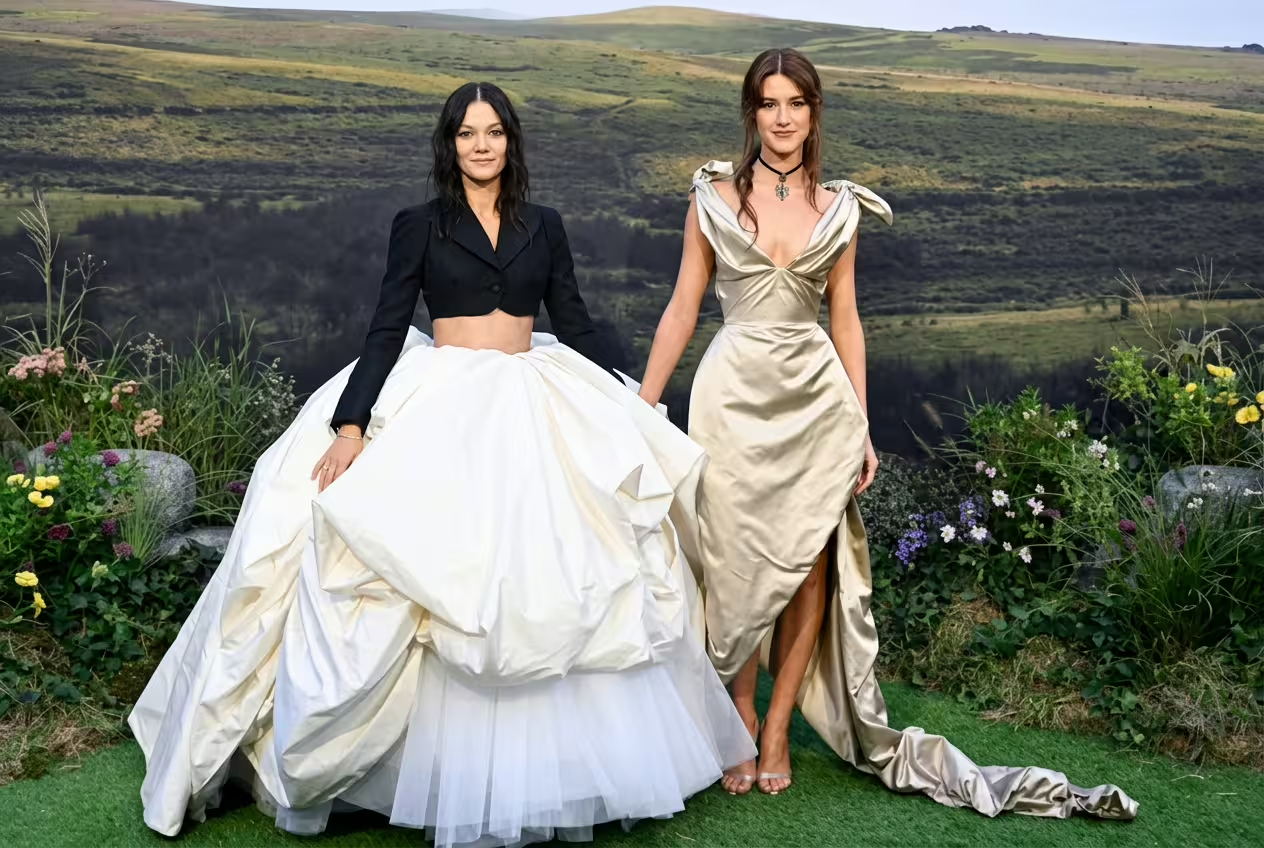
- From display to trade: Manarat Al Saadiyat is scheduled to host the inaugural Frieze Abu Dhabi on 19–22 November 2026. An art fair can put galleries and collectors into sustained contact with a city, but hosting one does not by itself build a lasting market or guarantee sales for regional artists.
- The Qatar model: Doha pairs I. M. Pei’s Museum of Islamic Art with Nouvel’s desert-rose National Museum of Qatar and Mathaf, a platform for modern and contemporary Arab work. Herzog & de Meuron’s Lusail Museum, still in development, is being built around questions raised by Orientalist art.
- Art Basel Qatar: The inaugural edition took place in February 2026 with 87 galleries from 31 countries and territories. Whether those encounters produce durable trade depends on what happens between fairs — the growth of galleries, expertise, patronage and artists’ careers rather than the event itself.
- Saudi scale: Snøhetta’s Ithra in Dhahran combines museum, library and theatre. AlUla’s planned museum network is tied to interpreting a heritage landscape. Diriyah is developing the Saudi Arabia Museum of Contemporary Art, where Sotheby’s held its first Saudi auction in 2025, reporting $17.3 million in sales.
- The older layer: The region’s museum economy predates the signature landmarks. Bahrain National Museum was inaugurated in 1988, and Bahrain’s Pearling Path preserves the industry that once sustained the economy. Oman has its National Museum in Muscat and Oman Across Ages Museum; Kuwait has the Sheikh Abdullah Al Salem Cultural Centre.
- Dubai’s sequence: Trade came first. Christie’s established its regional office in 2005 and held its first Middle Eastern art auction in 2006, well before the emirate’s institutions arrived. The Etihad Museum now tells the story of the UAE’s formation, alongside Shaun Killa’s Museum of the Future.
- The UNESCO framing: UNESCO identifies museums as contributors to tourism, skilled employment and local creative industries, and holds that they “can play a leading role in bolstering the creative economy locally and regionally.” The value accrues when acquisitions, research and education support working artists over time.
Between the lines:
The Gulf’s museum districts and its art trade are on separate clocks. Dubai built auction activity nearly two decades before its landmark institutions; Saadiyat built institutions first and gets its fair in 2026. Doha’s 87-gallery debut and Diriyah’s $17.3 million auction show collector appetite exists — but a single sale measures an event, not a market.
What’s next
Frieze Abu Dhabi’s debut on 19–22 November 2026 at Manarat Al Saadiyat is the next test, alongside whether Art Basel Qatar returns after its February 2026 edition. The Guggenheim Abu Dhabi and Lusail Museum openings remain undated.