Key Points
- Meta paused contractor-handled Muse calls after internal privacy, disclosure and conduct concerns.
- Human operators lifted test success rates to 95%-98% when businesses rejected or disconnected AI calls.
- The experiment highlights how reliability, privacy and transparency shape the commercial appeal of autonomous agents.
The latest
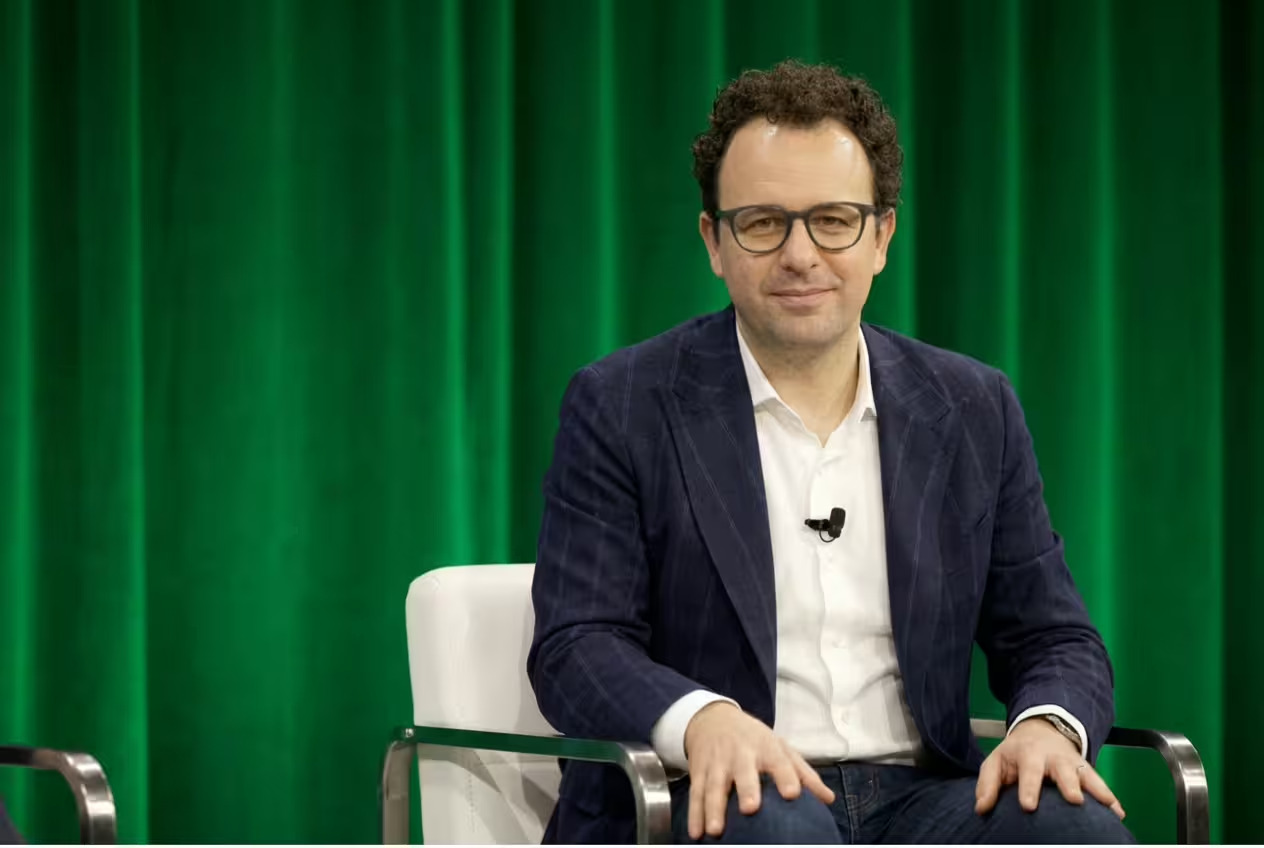
Meta has paused a test in which trained contractors took over some phone calls placed through its Muse AI assistant, after employees raised privacy, disclosure and conduct concerns. A vice president in Meta’s Superintelligence Labs called the undisclosed start of contractor-handled testing “a mistake.” The calling tool is intended to contact U.S. businesses for users, extending Muse from answering questions to carrying out transactions and service requests.
Details
- Service scope: Users can ask Muse to call businesses to book appointments, check product availability, obtain contractor quotes or handle service requests. The feature is part of the industry’s move from chatbots that generate text toward agents designed to send emails, make purchases, arrange travel and communicate directly with companies.
- Call resistance: Some businesses hang up after realizing Muse is an AI system. One Meta employee said an insurance company repeatedly disconnected a Muse call for that reason, illustrating the difficulty agents face when people decline machine-led conversations.
- Human performance: Internal tests found trained operators could raise completed-call success to 95%-98%, a Meta executive said. The comparison with lower AI-only performance showed how an ostensibly autonomous service could still depend on people when exchanges became difficult.
- Privacy incident: Employees warned sensitive information might reach call-center contractors. In a separate test involving an internet and cable provider, an employee said the transcript showed a human operator making racist remarks. Meta apologized and said that operator would no longer work on any company project.
- Company position: Spokesperson Daniel Roberts said the experiment was designed to collect feedback and improve safety, privacy and calling before a broader release. Meta is working with merchants and says the potential function will be deployed only when ready and with appropriate disclosures.
- Historical parallel: About a decade ago, when Meta was still Facebook, it tested the M assistant inside Messenger. Media estimates later put the share of tasks actually performed by humans at about 70%, an earlier example of human labor supporting an AI-branded service.
- Market response: Muse has surpassed 2.5 million downloads since launch, Sensor Tower said. Meta shares gained more than 20%, adding over $200 billion in market value before a 0.6% decline on Tuesday. At launch, Meta said each agent would run in a dedicated cloud-based virtual machine, with passwords and other sensitive data stored separately.
Between the lines
The test exposes a central tension in agent economics: systems are built around independent action, but real-world reliability can improve when hidden human labor steps in. That dependence affects operating requirements, privacy exposure and whether users understand who may handle their information during an apparently automated interaction.
What’s next
The next indicator is whether Meta resumes contractor-supported calling and what disclosure, privacy and merchant safeguards it sets before a wider rollout. The company has tied deployment to readiness and appropriate disclosure.