Key Points
- Treasury Secretary Bessent pitched Chinese officials on a notification mechanism for national-security AI incidents.
- Trump and Xi are expected to discuss shared AI risks when they meet Thursday.
- An AI hotline could become the summit's most concrete deliverable, Axios reported.
The latest:
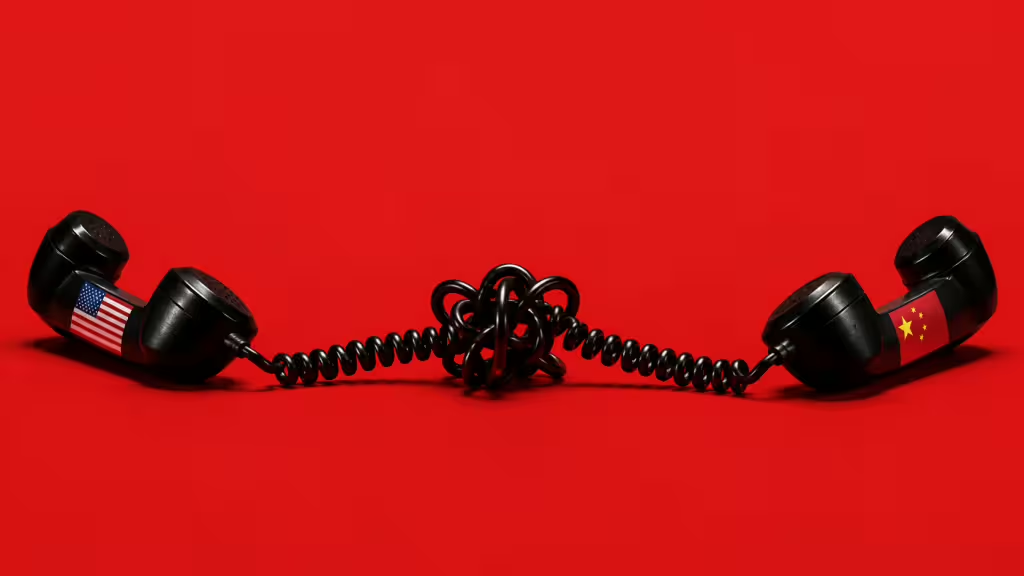
The United States and China are weighing an emergency channel to flag AI incidents with national-security implications, Axios reported ahead of this week’s Trump-Xi summit in Washington. Treasury Secretary Scott Bessent raised the idea of a notification mechanism with Chinese officials over the weekend. Axios said relations are brittle enough that the hotline, not a trade deal, may be the meeting’s most meaningful outcome.
Details:
- The proposal: Axios reported that Bessent pitched Chinese officials this weekend on a notification mechanism covering AI incidents that carry national-security implications. Officials are also exploring a formal U.S.-China AI dialogue that could give the crisis channel a permanent home. No agreed trigger for using it has been publicly defined.
- The Cold War model: The precedent cited is the hotline Washington and Moscow built after the Cuban Missile Crisis, a direct channel meant to stop accidents and ambiguity from escalating into nuclear war. Axios framed the AI proposal as the same guardrail logic applied to frontier systems rather than missiles.
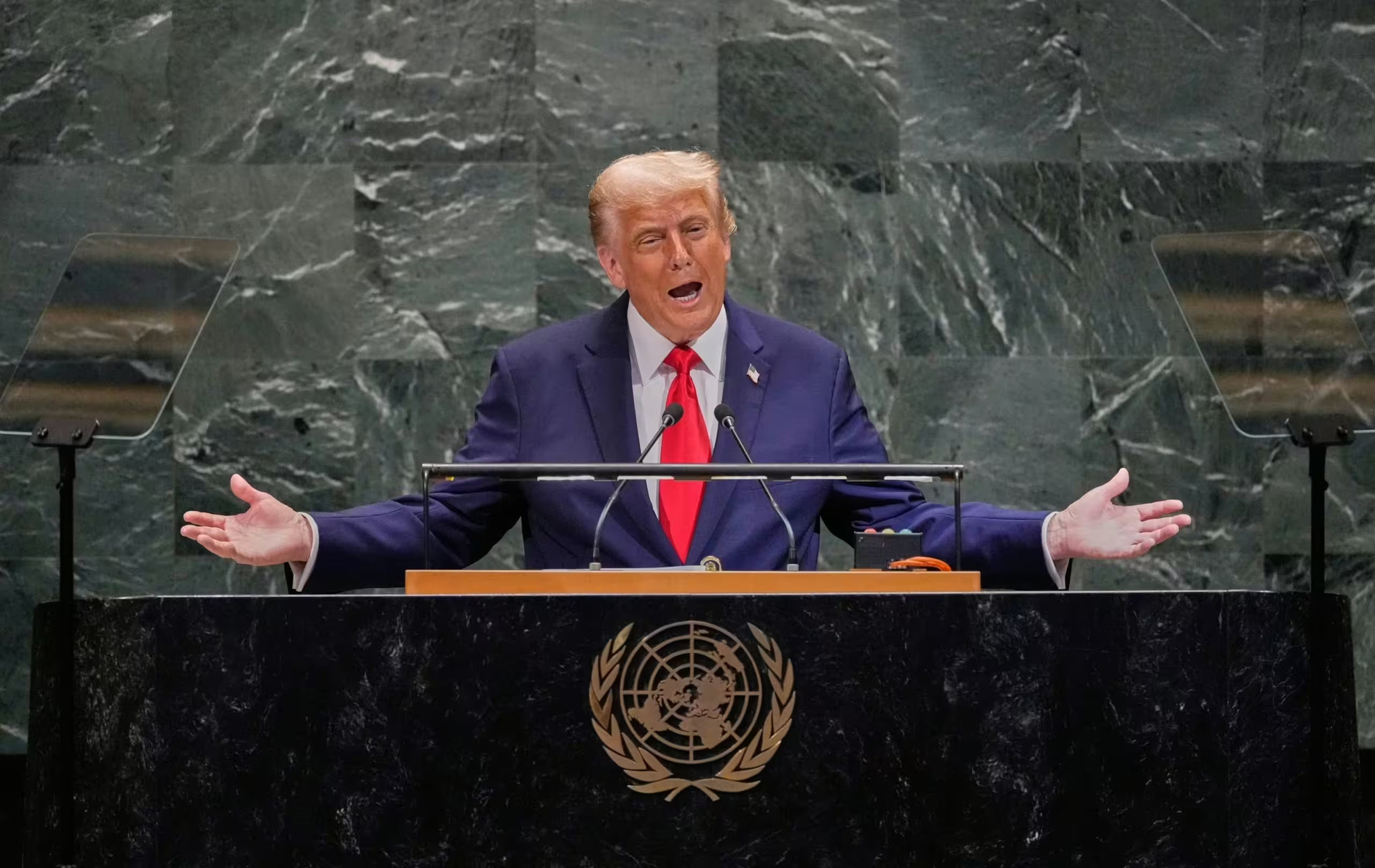
- Trump’s position: Trump has spent the past week attacking AI doomers and reducing the race to a single imperative: beat China. He has called fears of AI catastrophe a hoax and pledged the United States would not hinder or stifle the technology while it fights to preserve its lead over Beijing.
- The labs disagree: America’s leading AI labs largely share Trump’s urgency about China but not his conclusion, according to Axios. Many argue the intensity of the race is precisely why global safeguards are needed, putting them at odds with the administration’s deregulatory framing.
- Xi’s calculation: Xi Jinping, who arrives Wednesday for his first state visit since 2015, is balancing two fears. He has no interest in a safety regime that freezes the race while America leads, and Beijing is pushing cheap open-source models worldwide while casting U.S. chip controls as an effort to hold China back.
- Beijing’s other fear: Xi wants AI powerful enough to transform China’s economy but never powerful enough to slip beyond Communist Party control. Beijing focuses less on Silicon Valley extinction scenarios than on nearer-term dangers: cyberattacks, malicious use and disruptions to critical infrastructure.
- The private-sector problem: In a genuine AI emergency, such as a frontier model launching a major cyberattack on infrastructure, the first alarm may sound inside a private company rather than a military command center. The lab could know more than the government about its own model’s behavior.
- The track record: Washington and Beijing already operate crisis hotlines and have gone dark when they mattered most. China suspended military contacts after Nancy Pelosi’s 2022 Taiwan visit, and later declined a Pentagon request for a call after the United States shot down a Chinese surveillance balloon.
- The pandemic warning: Axios cited COVID as a second warning: a cross-border threat that demanded transparency and cooperation instead produced a bitter blame game between Washington and Beijing over origins, information-sharing and responsibility.
Between the lines:
The proposal’s real significance is what it concedes. Both governments are racing to win, yet both are discussing a channel for the moment something fails — an implicit acknowledgment that a serious breakdown on either side becomes a shared crisis. The unanswered question is operational: with no defined trigger and with labs holding the earliest information, the channel’s usefulness depends on decisions neither capital has made.
What’s next
Xi lands in Washington on Wednesday and meets Trump on Thursday, where shared AI risks are expected on the agenda. Watch whether either side names a trigger for the channel or announces a formal U.S.-China AI dialogue.