
Key Points
- Iran doubles the price of petrol consumed above the subsidized quota starting Tuesday, the FT reported.
- War damage to refineries and a US naval blockade have cut imports and drained strategic fuel reserves.
- Inflation near 90% makes fuel repricing politically risky; a 2019 increase triggered deadly nationwide protests.
The latest:
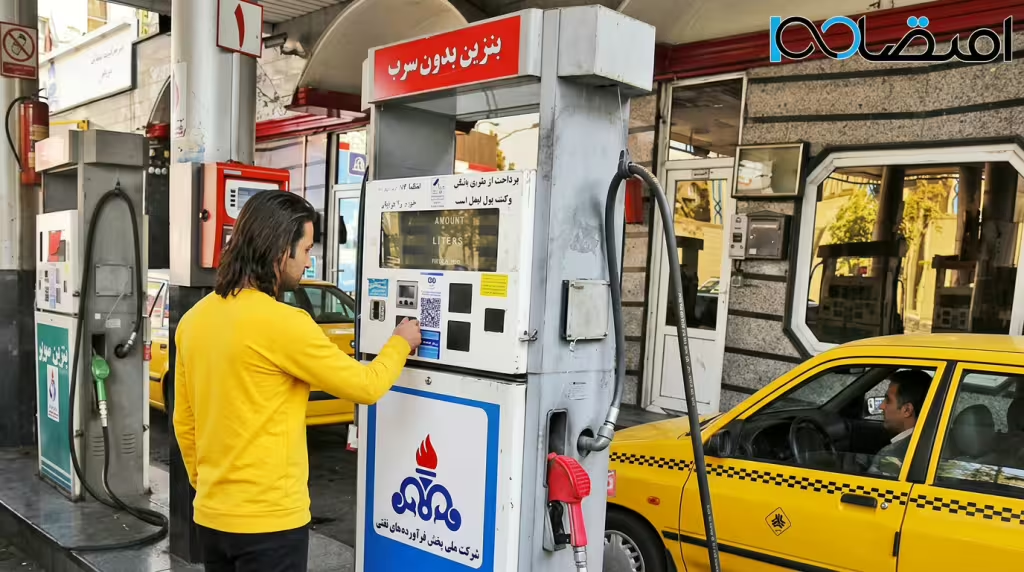
Petrol consumed above Iran’s fixed subsidy quota will cost double from Tuesday, rising from IR50,000 to IR100,000 a litre, the Financial Times reported. Government spokesperson Fatemeh Mohajerani said the 110-litre quota itself stays in place and proceeds would go toward supporting public livelihoods. Officials said 85% of the population would be unaffected because only above-quota consumption is repriced.
Details:
- The subsidy: Iranian motorists receive a quota of 110 litres of petrol at roughly $0.013 a litre or less, the FT reported, making fuel one of the cheapest commodities in the economy. The new pricing touches only volume consumed beyond the quota.
- The shortfall: Mohammad Sadegh Azimifar, head of the state oil refining and distribution company, said domestic petrol output had reached record levels but the country still faces a daily shortfall of 10 million litres. He did not specify how long reserves could cover the gap.
- Structural cause: Despite vast oil and gas reserves, Iran has long imported petrol because refining capacity is limited and consumption is high, driven by inefficient cars and weak public transport, according to the FT. The war widened a gap that predates it.
- War damage: Iran lost refining capacity to early strikes on oil and petrochemical facilities after the US-Israeli war began in February, the FT reported. The government has since drawn down strategic reserves to cover domestic demand.
- The blockade: A US naval blockade on southern ports, largely in place since April, has choked fuel imports, according to the FT, leaving Tehran importing less at the moment domestic output could not close the gap.
- Political risk: President Masoud Pezeshkian has repeatedly warned the current subsidy is unsustainable, the FT reported, but many Iranians regard cheap fuel as a birthright. An abrupt price rise in 2019 triggered deadly nationwide protests.
- Inflation backdrop: Economists warned of knock-on effects on the prices of goods and services, the FT reported, at a time when annual inflation is bordering on 90% and the rial has hit a record low of 2.25 million to the dollar.
- Washington’s shift: The United States has moved toward economic pressure on Tehran, expanding secondary sanctions on Iran’s trading partners, according to the FT, running alongside the naval blockade rather than replacing it.
- Tehran’s claim: Iran’s top security official Mohsen Rezaei said Sunday the country was still selling about 1.5 million barrels of oil a day despite the blockade, using floating storage built up during a brief oil waiver earlier this year, and receiving payment for it.
Background:
Iran’s fuel subsidy has survived successive governments as a political commitment rather than an economic one. The 2019 attempt to raise prices abruptly set the precedent officials now weigh: street unrest that spread nationwide and ended in deaths.
Between the lines:
The design of the increase reads as an attempt to contain that precedent. By keeping the 110-litre quota untouched and repricing only what sits above it, the government can argue 85% of Iranians pay nothing more, isolating the cost to heavier users. But with inflation near 90% and a record-low rial, the economists cited by the FT expect the rise to pass into goods and services prices regardless.
What’s next
The new above-quota price takes effect Tuesday. Watch whether the daily 10-million-litre shortfall narrows, whether the blockade on southern ports eases, and whether Rezaei’s claimed 1.5 million barrels a day in sales holds.