
Key Points
- Most Gulf indices closed marginally up Tuesday, with gains capped by escalating US-Iran hostilities, Reuters reported.
- Houthi strikes halted several Saudi energy facilities and injured 73 people, days after US strikes on Iranian tankers.
- Brent rose 1.68% to $98.63, leaving regional sentiment tied to the Strait of Hormuz.
The latest:
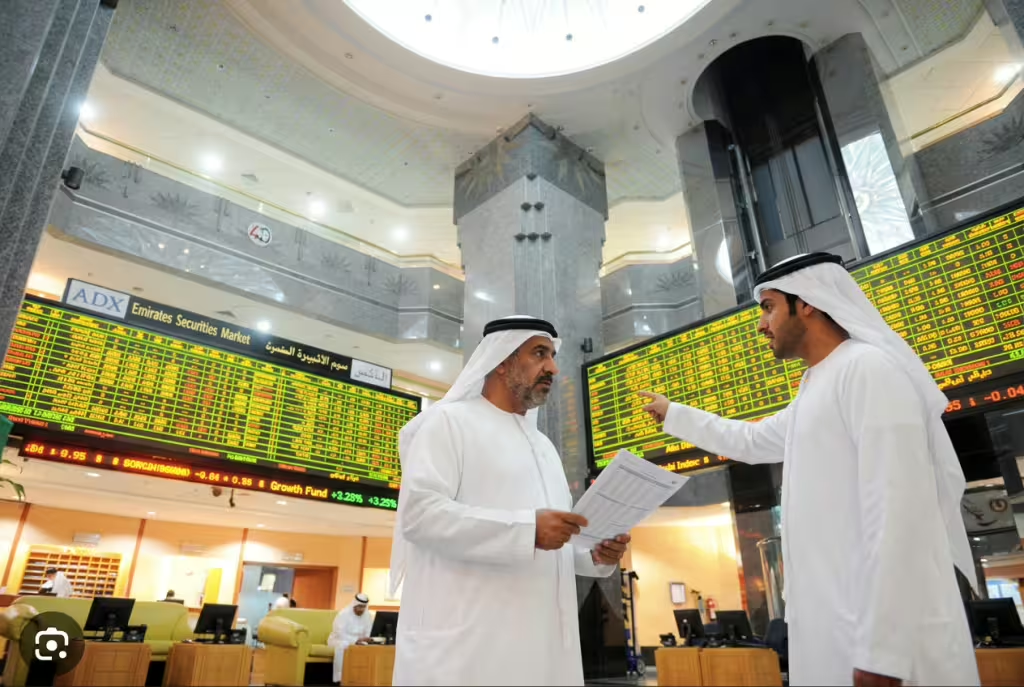
Gulf equity markets eked out modest gains on Tuesday as traders priced in a prolonged US-Iran confrontation, Reuters reported. Saudi Arabia’s TASI reversed early losses to finish 0.1% higher at 11,036, while Qatar’s index led the region with a 0.7% advance. Brent crude climbed 1.68% to $98.63 a barrel after strikes disrupted Saudi energy operations.
Details:
- The Saudi market: TASI closed 0.1% higher at 11,036 after erasing early declines, Reuters reported. Al Rajhi Bank added 0.3% and oil major Saudi Aramco gained 0.8%, leaving the index’s advance narrower than those of its Gulf peers despite the energy disruption on its own territory.
- The energy disruption: Operations at several Saudi energy facilities were halted Tuesday following Houthi strikes that injured 73 people. Saudi authorities condemned the attacks as a severe and dangerous escalation. The number of facilities affected and the expected duration of the shutdowns were not specified.
- The escalation cycle: The Houthi strikes came days after Saturday’s US strikes on three Iranian tankers near the Kharg Island export hub, launched in retaliation for Revolutionary Guard attacks on American vessels, Reuters reported. Tehran threatened Washington with economic warfare and claimed an advanced missile strike on American warships.
- Oil prices: Brent crude futures rose 1.68% to $98.63 a barrel, a level that supports energy-heavy Gulf budgets even as it signals mounting risk to supply routes. Aramco’s 0.8% gain was among the stronger single-stock moves on the Saudi benchmark.
- The analyst view: Mahmoud Mashal, senior market analyst at VT Markets Dubai, said regional markets would hinge on developments in the Strait of Hormuz and any signs of de-escalation. He assessed that geopolitical strain could weigh on sentiment while diplomatic progress would lift it.
- The other Gulf bourses: Qatar’s index advanced 0.7%, led by a 0.7% gain in Qatar National Bank. Dubai’s main index rose 0.3%, with top lender Emirates NBD up 1.4%, and Abu Dhabi’s index gained 0.5%. Bahrain closed flat, Oman added 0.1% and Kuwait slipped 0.2%.
- The UAE response: Presidential adviser Anwar Gargash said Monday the UAE is establishing backup export corridors so its economy is not “held hostage” by the standoff, Reuters reported. He did not identify the routes involved or a timeline for bringing them into service.
- Outside the Gulf: Egypt’s EGX30 was the region’s clear underperformer, falling 0.8% on Tuesday while every Gulf benchmark except Kuwait held flat or finished in positive territory.
Between the lines:
The muted gains sit uneasily beside the day’s news: energy facilities offline, 73 people injured, and Brent near $99. Traders appear to be treating higher crude as an offset to disruption risk for oil-linked economies, which would explain why Aramco rose on a day its sector was under attack.
What’s next
Watch shipping conditions in the Strait of Hormuz, the restart timeline for the halted Saudi facilities, any Iranian follow-through on its economic warfare threat, and whether Brent holds above $98.