Key Points
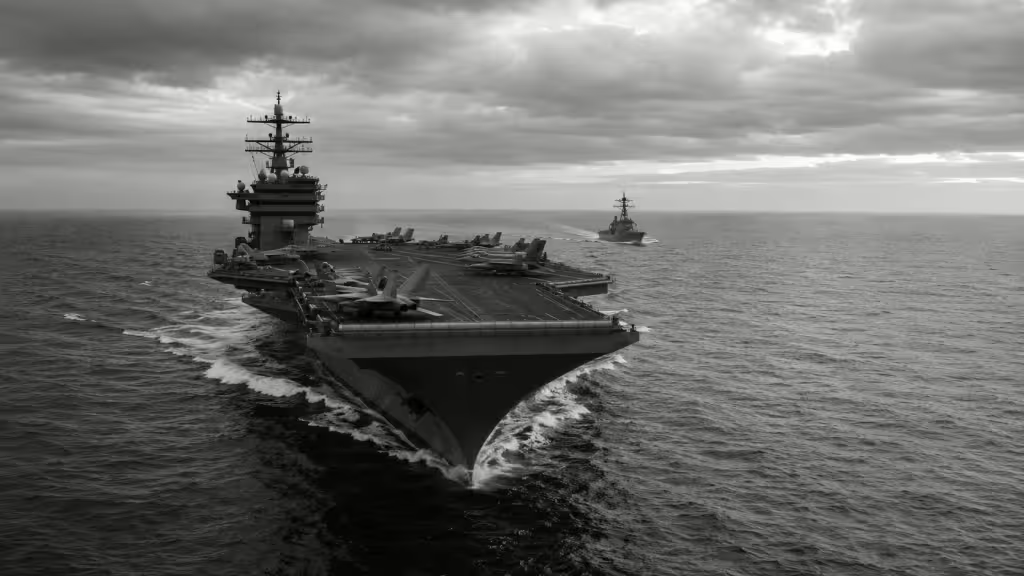
- U.S. officials: The aircraft carrier USS George Washington is heading to the Middle East to replace the USS Abraham Lincoln.
- The Lincoln has been deployed for more than 250 days and participated in the bombing campaign and naval blockade against Iran.
- he rotation eases operational strain that prompted congressional scrutiny of conditions facing sailors.
The latest:
The United States is preparing to send the aircraft carrier USS George Washington to the Middle East to replace the USS Abraham Lincoln as part of a previously scheduled rotation, according to U.S. officials who spoke to The Wall Street Journal. The move comes after the Lincoln spent more than 250 days deployed, amid congressional concerns about the crew’s living conditions and psychological strain.
Details:
- Rotation plan: A U.S. official confirmed that the replacement of the Lincoln had been planned before concerns were raised about living conditions aboard the carrier.
- Deployment: The Abraham Lincoln began its scheduled deployment in November before being redirected to the Middle East in January ahead of the U.S. war against Iran.
- Military role: The carrier and its aircraft played a central role in the U.S. bombing campaign, Operation Epic Fury, and later participated in the U.S. blockade of Iranian ports.
- Congressional letter: Blumenthal, a Democrat from Connecticut, sent a letter to Defense Secretary Pete Hegseth and Acting Navy Secretary Hung Cao citing shortages of basic supplies, water contamination, deteriorating mental health and flight-deck safety concerns.
- Missing mail: Blumenthal also cited disruptions to the mail system that caused family care packages bound for the carrier to go missing for months. The published letter did not specify the number of sailors affected or identify any corrective action taken by the Navy.
- Earlier reports: Lawmakers expressed concern about sailors suffering from exhaustion and deteriorating mental health because of the lengthy deployment and the lack of regular port visits.
- Congressional action: Republican Representative Marlin Stutzman said he would seek an update from the Pentagon and the administration about conditions facing the sailors, stressing the need to ensure they receive proper care.
- Navy’s position: The U.S. Navy did not immediately respond to the newspaper’s request for comment on living conditions aboard the Lincoln.
- Movements of the replacement carrier: The George Washington is based in Japan and has been operating in the Pacific in recent weeks. It transited the Strait of Malacca this week alongside guided-missile destroyers, according to open-source information.
Background:
The U.S. Navy uses carrier rotations to maintain a continuous naval presence in operational areas while allowing ships and their crews time for maintenance and rest. Redirecting the Abraham Lincoln to the Middle East and deploying it in the war against Iran and the blockade of Iranian ports extended its mission and reduced opportunities for port calls, increasing the operational and human strain on its crew.
Between the lines:
Sending a replacement carrier indicates that Washington wants to preserve its air and naval capabilities in the Middle East without further extending the Lincoln’s exhausting mission. Although officials maintain that the rotation was scheduled in advance, congressional demands show that sustained high-tempo operations have directly affected the crew’s readiness and living conditions, highlighting the human cost of prolonged military deployments.
What’s next
The George Washington is expected to continue moving from the Pacific toward the Middle East before taking over the Lincoln’s mission. Lawmakers are also expected to press the Pentagon for a briefing on conditions facing the sailors, measures to address shortages of supplies and water and mental-health concerns, and a timetable for the exhausted carrier’s return to port.