
Key Points
- Five months of war with Iran have cut U.S. air-defense and long-range missile inventories, senior officials told The New York Times.
- Washington has delayed deliveries to European and Asian buyers and pulled interceptors from South Korea and elsewhere.
- Analysts say the shortfall could reshape how Moscow and Beijing calculate the risks of confronting the United States.
The latest:
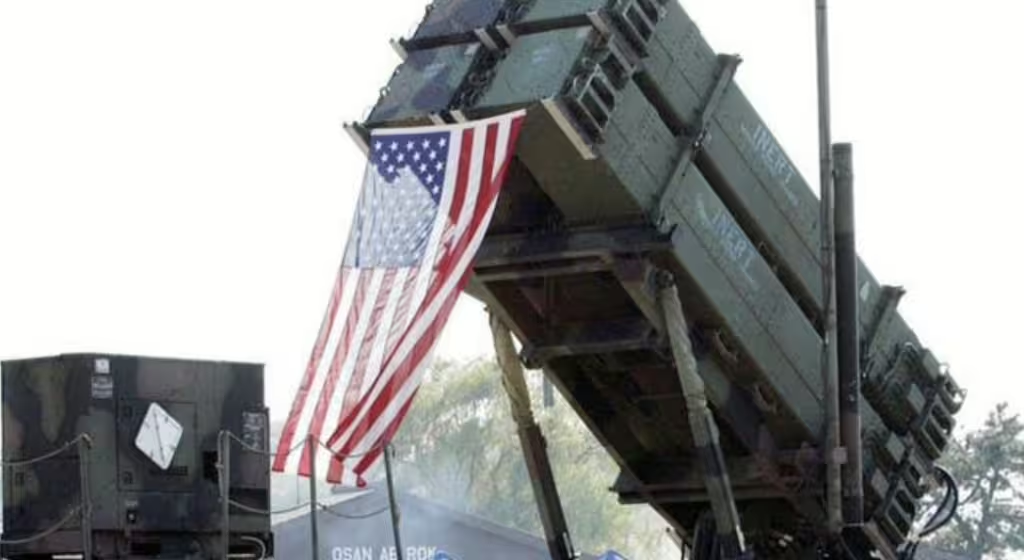
More than 1,500 Patriot interceptors have been expended in the Iran war, leaving a U.S. inventory of fewer than 1,700, according to two people briefed on the stockpile and cited by The New York Times. The White House and the Pentagon reject the reporting, saying the United States retains everything needed to strike wherever the president orders.
Details:
- The numbers: Replenishing the Patriot interceptors used since the war began could take more than two years even with accelerated production, the report said. It gave no target date for restoring pre-war levels and did not detail contractor output figures.
- What ran low: U.S. forces largely exhausted stocks of certain long-range weapons, including ATACMS and Precision Strike Missiles, officials said. More than 100,000 less advanced guided bombs remain, but they require aircraft to fly close to targets.
- The redeployments: Indo-Pacific Command supplied Tomahawks and other long-range missiles, while hundreds of advanced interceptors, a carrier strike group and top-end destroyers moved to the Middle East. The report did not specify how many units remain in Asia.
- The official denial: Press secretary Karoline Leavitt said defense firms are producing more munitions than ever and demanded prosecution of leakers. Pentagon spokesman Sean Parnell called shortage reports false. Neither addressed the specific interceptor figures.
- Inside the decision: Joint Chiefs Chairman Gen. Dan Caine warned Trump before the war about drawing further on depleted stockpiles, two officials with knowledge of the exchanges said. Trump proceeded, expecting a short war. Caine’s spokesman declined to comment.
- Impact on Ukraine: President Volodymyr Zelensky said Western air-defense missile deliveries fell threefold this year against 2025. Ukraine intercepted none of 28 Russian missiles on Wednesday, in strikes that killed at least 17 people.
- Allied doubts: Some U.S. officials fear South Korea and Japan may question American conventional protection and lean toward nuclear options, while European allies look to buy elsewhere. The report named no government that has changed policy.
- The leak hunt: Trump has ordered a government-wide search for leakers and demanded criminal prosecutions, telling advisers that discussing the shortage signals weakness. No investigation scope, agency or referral was disclosed.
Background:
The United States and Israel began striking Iran on Feb. 28, and Trump promised victory within weeks. More than five months on, the war continues. Part of the munitions shortfall predates his term, experts said.
Between the lines:
Tom Karako of the Center for Strategic and International Studies called it a generational annihilation of conventional deterrence and said it must affect Russian and Chinese calculations. Todd Harrison of the American Enterprise Institute argued the vulnerability widens the longer the fire exchange with Iran runs. Carnegie’s Dara Massicot said Moscow had already begun revising its estimates of U.S. production speed during the Ukraine war.
What’s next
Watch whether Washington resumes delayed interceptor deliveries to Europe and Asia, whether Trump revives the bombing campaign shelved last month, and whether the leak investigation produces referrals.