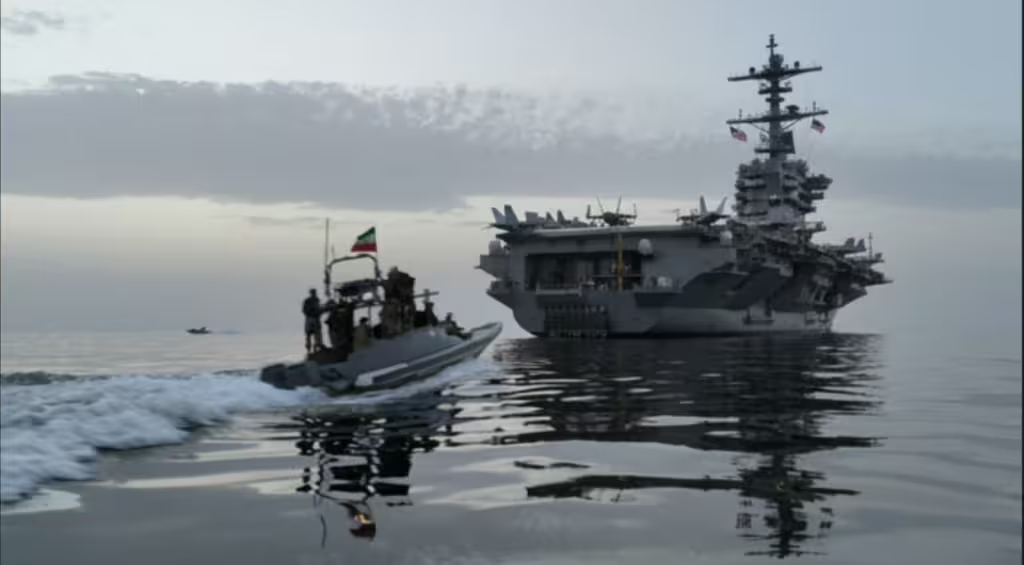
Key Points
- Tehran is pressing to exclude US Navy ships from the Strait of Hormuz under a reopening deal.
- Washington has told mediators it rejects any Iranian restrictions, tolls or fees on Hormuz traffic.
- The demand targets a US naval presence in the Gulf dating to 1971, now central to war-ending talks.
The latest:
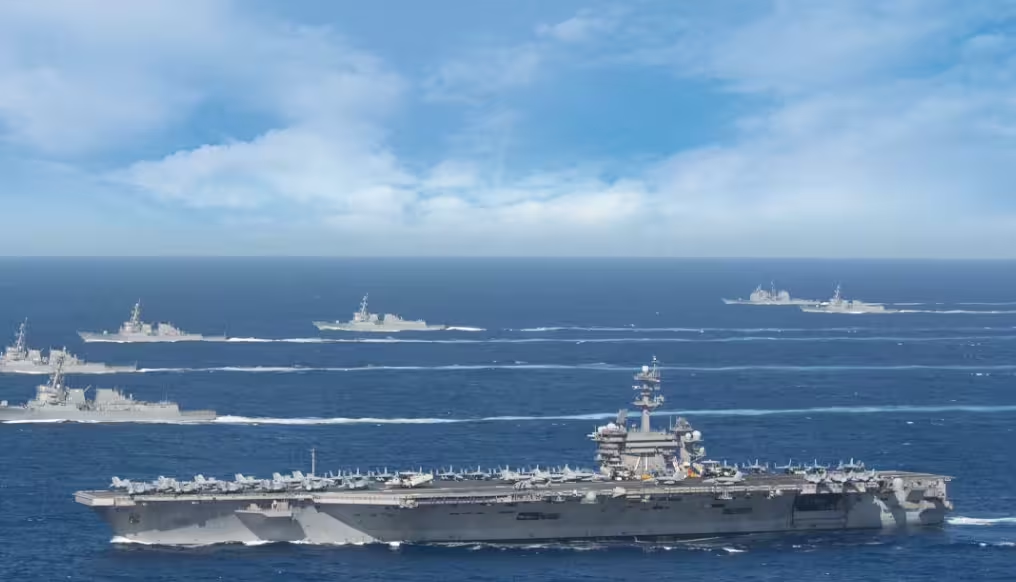
Iran is vowing to bar US Navy warships from the Strait of Hormuz as a condition for reopening the waterway, the Wall Street Journal reported, a demand US officials have told mediators they will not accept alongside Iranian tolls or restrictions.
Details:
- The mediation: Oman is leading talks with Tehran. Deputy Foreign Minister Kazem Gharibabadi said an understanding was reached “in principle,” with a final text due soon.
- The draft: Officials said the plan sets a temporary inbound lane near Iran and an outbound lane near Oman, pending approval by Iran’s top leadership.
- Iran’s additions: Fars reported draft legislation banning Israeli ships, demanding compensation from hostile countries, and giving Iran’s government and military control of navigation.
- Washington’s line: A US official said temporary routes must carry no approvals, permissions or tolls; another said the port blockade would lift if Hormuz opened unimpeded.
- The mediators: Mediators said the Iran-Oman text excludes the Fars provisions, but took the demands seriously after Iranian officials relayed them to Arab intermediaries.
Background:
A memorandum Trump signed with Iran in June sought to open Hormuz and pave the way for ending the war, but collapsed after Iranian attacks on shipping. About a fifth of the world’s oil normally transits the strait.
Between the lines:
Jonathan Panikoff of the Atlantic Council assessed that whatever Trump does, the outcome will be significant Iranian de facto control of the strait. Ali Vaez of the Crisis Group said the warship ban sits at the heart of Tehran’s demands. Rosemary Kelanic of Defense Priorities argued Iran has already pushed usable US military power out of the Gulf, while analysts and former commanders judged Iran cannot militarily deny the Navy access if it chooses to sail. Chris Long of Neptune P2P Group expects energy flows to stay “slow and low for years.”
What’s next
Watch for Supreme Leader Mojtaba Khamenei’s sign-off, the Supreme National Security Council’s review of the draft legislation, publication of the final Iran-Oman text, and any US move to lift the port blockade.