The latest
The extensive use of U.S. long-range precision missiles during the war with Iran has sparked concerns inside the Trump administration about the military’s readiness for future conflicts, according to three people familiar with the matter who spoke to Reuters. The White House, however, insists the United States still possesses more munitions than it needs and says defense production is expanding at a record pace.
Details
- Long-range missiles: Sources told Reuters that the United States used nearly all—or the vast majority—of its Army Tactical Missile Systems (ATACMS) and Precision Strike Missiles (PrSM) during the conflict.
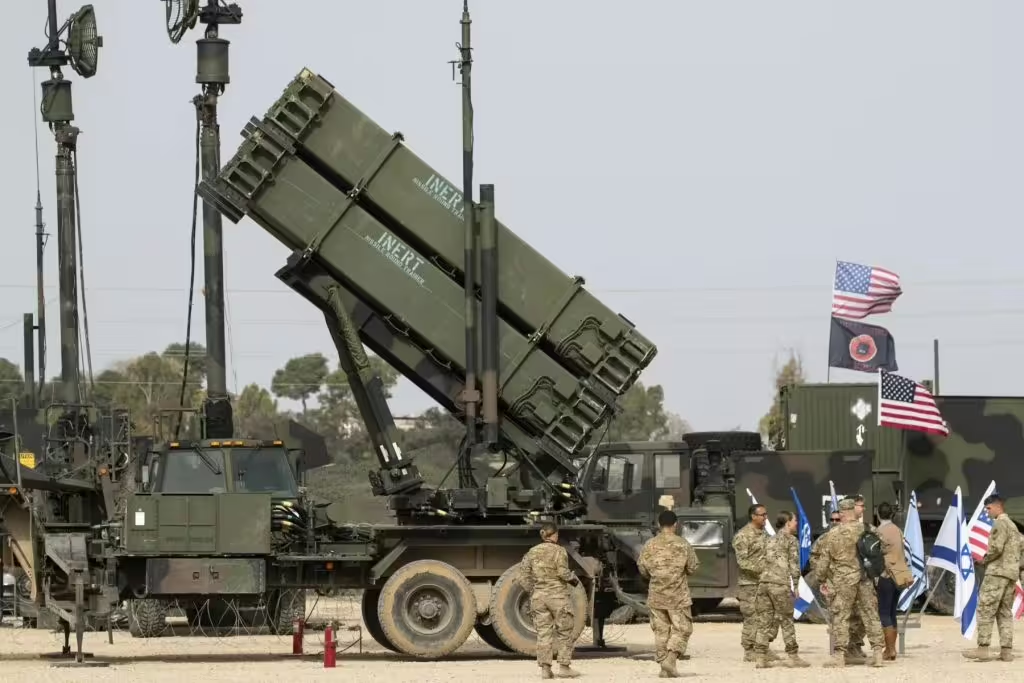
- Military warnings: Two sources said senior military leaders had warned the administration for weeks that stocks of critical munitions, including Patriot interceptor missiles, were falling.
- Trump’s position: President Donald Trump said the United States has “far more munitions than any other country,” adding that American defense companies are expanding production to record levels.
- Independent estimates: The Center for Strategic and International Studies (CSIS) estimates that about 65% of Patriot interceptors and at least 38% of THAAD interceptors were used during the war, while noting that replacing some advanced munitions could take years.
- Internal debate: Reuters reported that officials inside the Trump administration debated how long military operations against Iran could continue without reducing inventories to levels that would limit America’s ability to respond to crises elsewhere. A U.S. official denied that depleted stockpiles were the reason for halting further escalation.
Background
ATACMS and PrSM are among the U.S. Army’s most important long-range precision strike weapons, while Patriot and THAAD systems form the backbone of America’s ballistic missile defense. The latest depletion follows years of military assistance to Ukraine and comes as the Pentagon increasingly prioritizes the Indo-Pacific in preparation for any future confrontation with China. Defense analysts note that producing some advanced missiles can take between one and five years, making rapid replenishment difficult.
Between the lines
The declining inventories do not mean the United States has lost its military edge, but they do narrow Washington’s strategic flexibility if multiple major crises emerge simultaneously. As a result, the Pentagon is placing greater emphasis on expanding industrial capacity, accelerating missile production, and prioritizing the use of its most advanced—and expensive—munitions.
What to watch
Attention will now focus on additional Pentagon funding requests, efforts to expand production of long-range missiles and air defense systems, and any future official updates on U.S. munition stockpiles.