
The latest
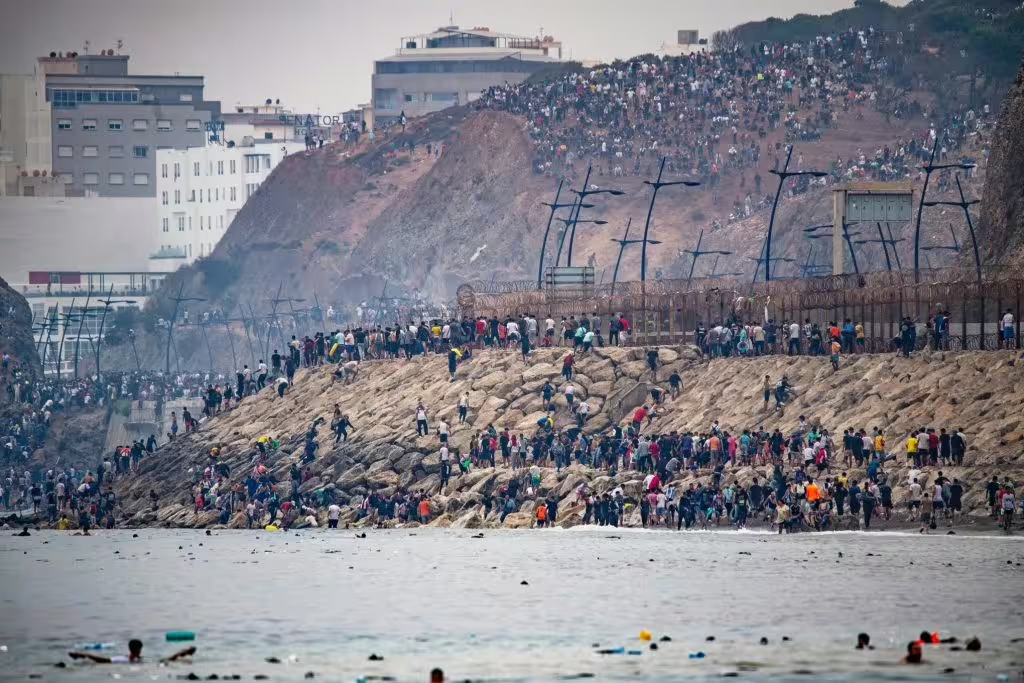
Ceuta has become the center of a major European migration crisis after around 49,000 migrants crossed from Morocco into the Spanish enclave in a single day, according to Spanish authorities. Madrid described the incident as a violation of its sovereignty, deployed the military, accelerated migrant returns, and faced growing political divisions across the European Union over migration and border security.
Details
- The numbers: Spanish authorities said about 49,000 people entered Ceuta within a single day before the Interior Ministry announced that tens of thousands had been returned to Morocco within 48 hours.
- The cause: The Spanish government blamed misleading social media claims about a Supreme Court ruling on migrant returns, combined with human trafficking networks that exploited the situation.
- Morocco’s response: Moroccan lawmaker Lahcen Haddad rejected accusations that Rabat intentionally allowed the crossings, saying rumors drew thousands of young people to the border and overwhelmed security forces.
- European divisions: Italy called for extraordinary measures, France tightened controls along its border with Spain, and Madrid urged an emergency EU meeting, arguing that protecting the bloc’s external borders is a shared responsibility.
- Spain’s measures: Madrid reinforced military and police deployments, introduced additional maritime barriers, and Prime Minister Pedro Sánchez said full control of the border had been restored within two days.
Background
Ceuta and Melilla form the European Union’s only land borders with Africa and have long been focal points for irregular migration. In 2021, around 8,000 migrants entered Ceuta within days, triggering a diplomatic crisis between Spain and Morocco. The latest surge followed a Spanish Supreme Court ruling requiring legal procedures before migrants intercepted at sea can be returned, a decision that was widely misrepresented on social media. Analysts also point to high youth unemployment and economic hardship in Morocco as key drivers of the crossings, while both Madrid and Rabat insist security cooperation remains in place.
Between the lines
The crisis highlights how migration has evolved from a bilateral issue between Spain and Morocco into a broader test of the European Union’s migration policy. While Spain focused on rapidly restoring control, European governments exposed deep divisions between calls for solidarity and demands for tougher border restrictions.
What to watch
EU interior ministers are expected to discuss additional support for Spain and measures to strengthen the bloc’s external borders, while Spain and Morocco continue coordinating migrant returns and efforts to prevent further mass crossings.